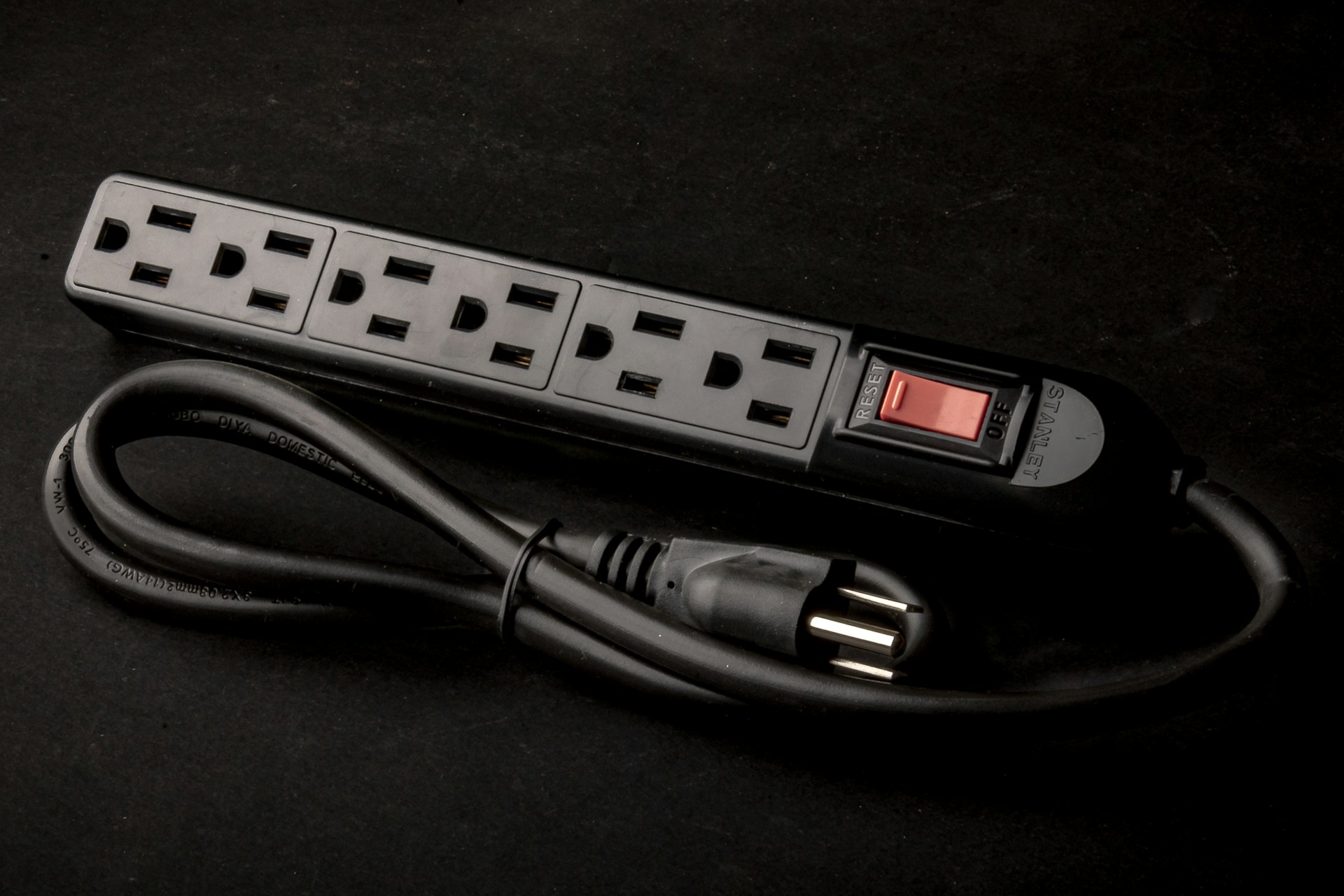
Power strips keep modern rooms running, but they also hide the easiest wiring mistakes to make. A desk turns into a charging station, a living room becomes a mini theater, and winter adds extra plug-in gadgets. To keep things tidy, cords get routed behind sofas and cabinets where heat and dust build quietly, especially after dark. Trouble rarely announces itself; it starts as a warm plug face, a loose outlet grip, or a strip that clicks or hums when the load changes. Most close calls come from repeat habits, not freak events. Once those habits change, breakers trip less, devices run steadier, and the whole setup feels under control.
Daisy-Chaining Strips To Reach One More Outlet
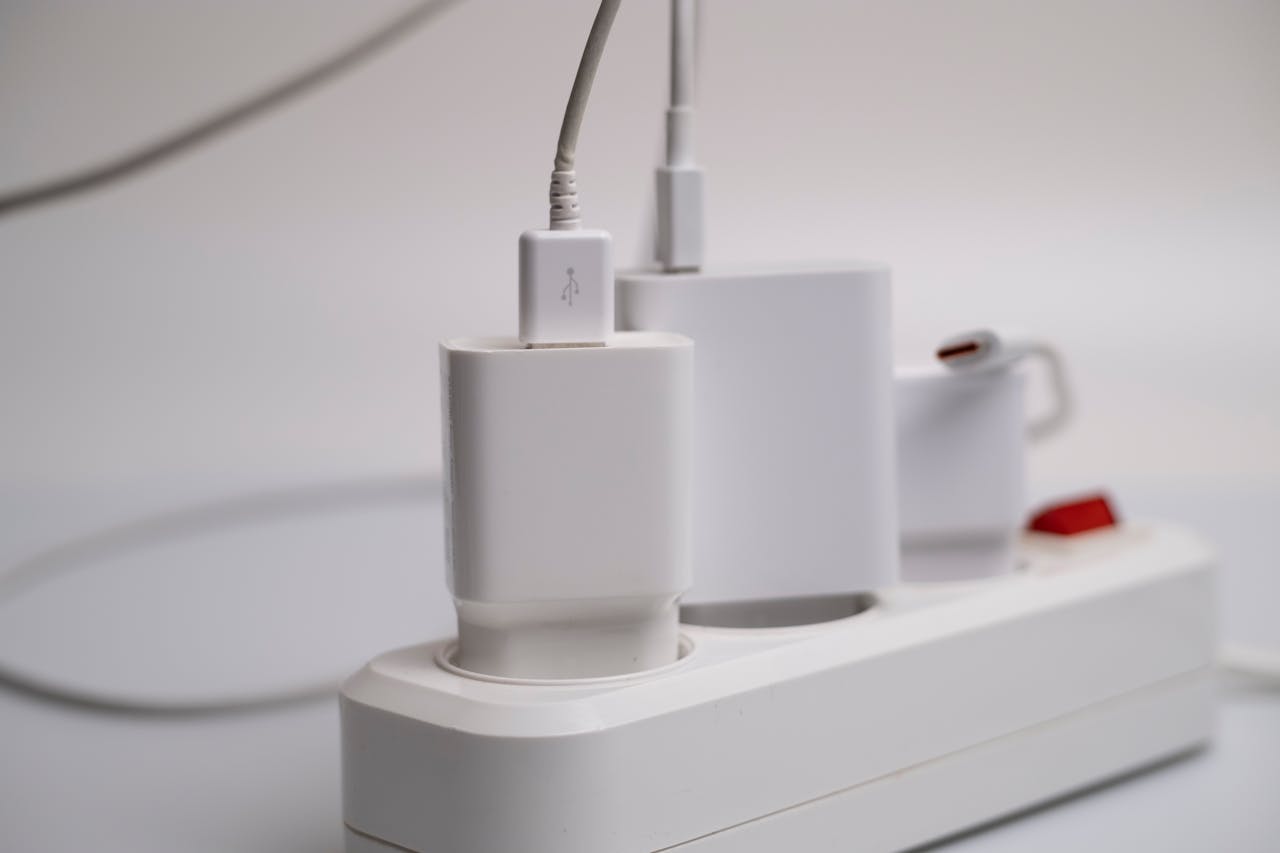
Daisy-chaining strips to reach a distant outlet feels tidy, but it piles stress onto a single wall connection. Each added plug increases resistance, and heat concentrates at the weakest contact, often the first strip or the wall receptacle.
The chain also invites quiet creep: one more charger, a desk lamp, a small fan, then a monitor, all sharing the same rating. Behind furniture, that warmth has nowhere to go, and a loose outlet grip makes it worse. A breaker trip, a hot plug face, or a faint plastic odor is a clear signal that the load has outgrown the workaround. Better: one rated strip, or an added outlet in the room.
Plugging Heat-Makers Into A Strip
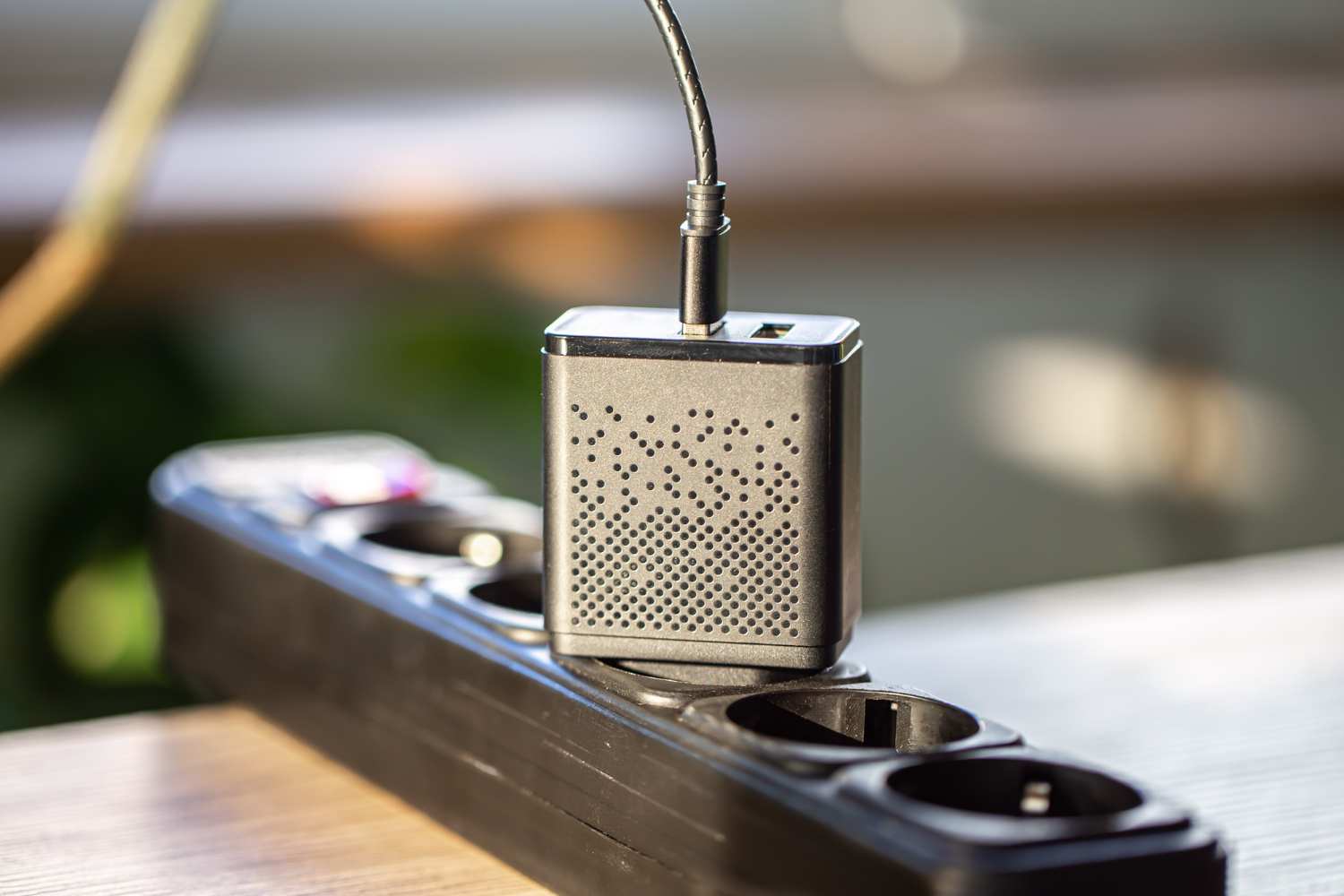
Power strips are built for light electronics, not devices that make heat or have motors that surge at startup. Space heaters, portable A/C units, hair dryers, kettles, microwaves, and many shop tools can draw close to the full circuit rating.
When that kind of load runs for minutes at a time, warmth builds at the plug blades, in the outlet contacts, and inside the strip housing. The appliance still seems normal, while the strip quietly degrades: outlets loosen, plastic discolors, and the cord jacket stiffens. If a strip runs warm or a breaker trips, the device belongs on a dedicated wall receptacle, without shared loads.
Hiding Strips Under Rugs Or Furniture
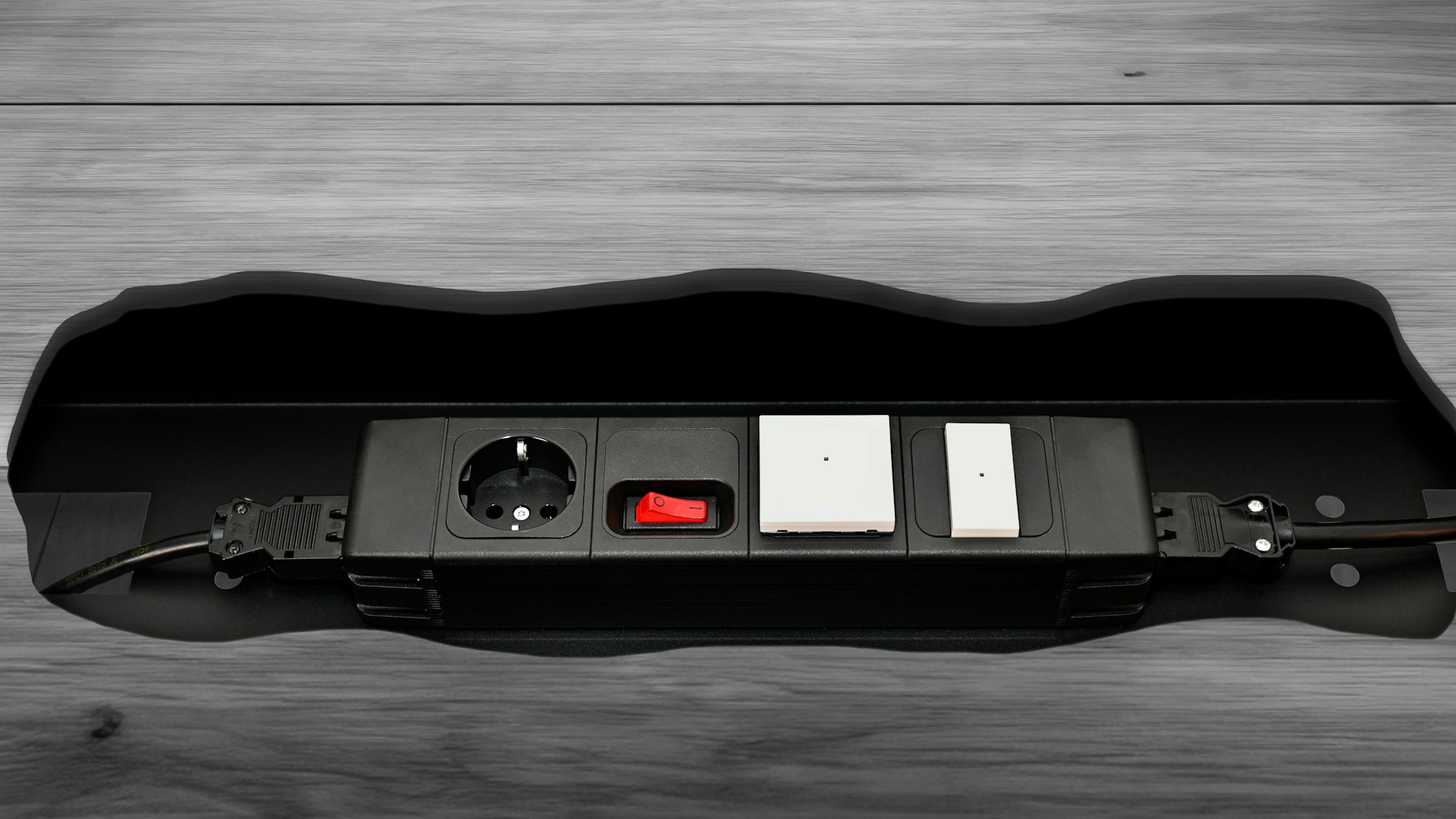
Tucking a strip under a rug or behind furniture keeps cords hidden, but it also traps heat and prevents checks. Foot traffic can flatten cords, and chair legs can pinch insulation until the conductors inside start to fatigue.
Dust packs into outlets, fabric holds warmth against the casing, and a plug that is slightly loose can wiggle for months. Chewed plastic and small spills add stress when the strip sits on the floor. Early clues stay invisible: a lamp that flickers, an outlet that no longer grips, or a strip that feels warmer than the room. Keeping strips exposed and ventilated makes warnings easier to catch in time.
Keeping Old Or Questionable Strips In Service
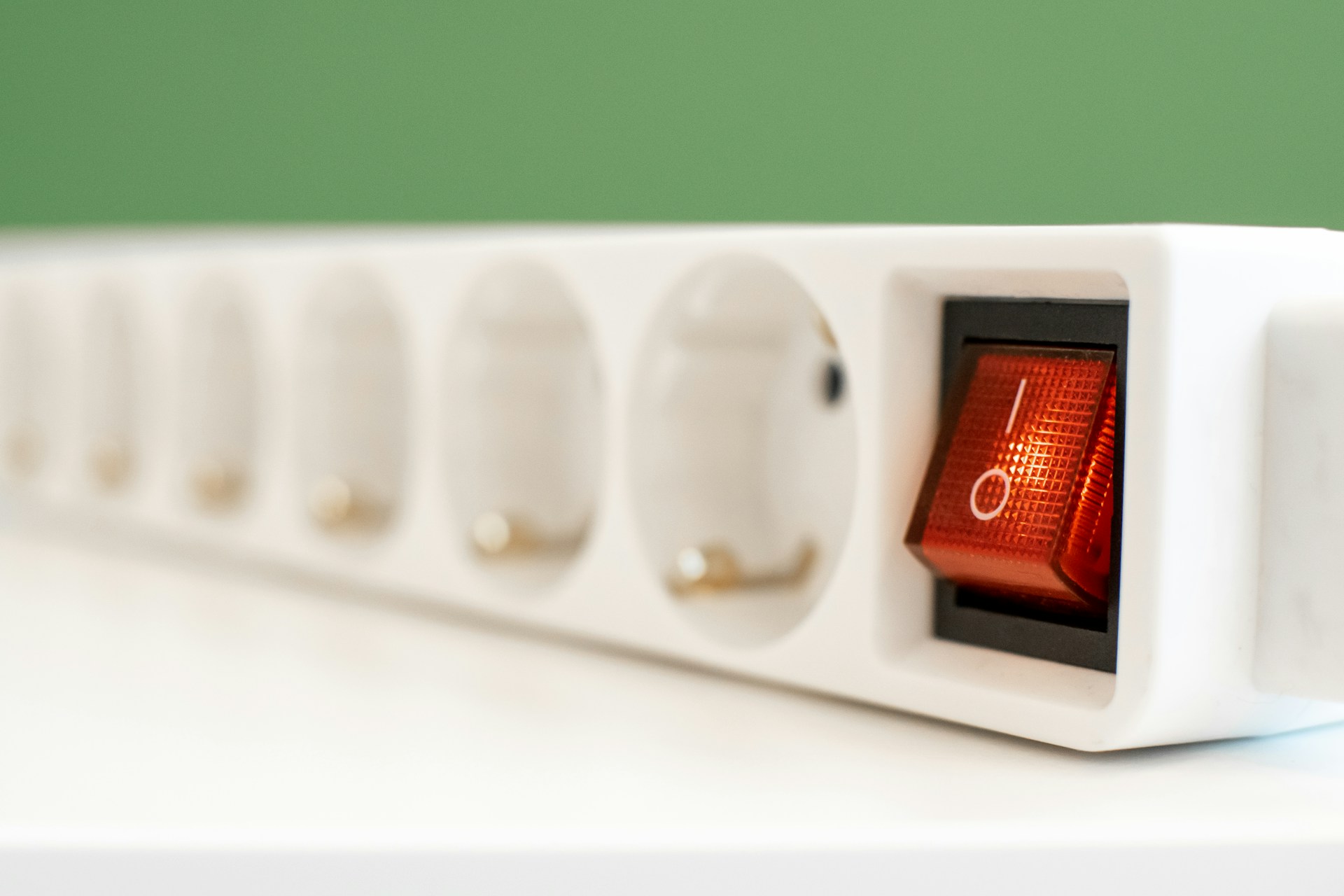
Power strips wear out in quiet ways. Outlets loosen, switches get gritty, and plastic can crack after years of heat cycles behind a desk. Low-quality models add uncertainty because internal wiring may not match the rating, and safety listing marks may be absent. Age matters most where plugs are swapped often.
Scorching, a stiff cord, or outlets that no longer grip a plug are not cosmetic issues. They point to failing contacts, where resistance turns into heat. On surge protectors, a protection light that goes dark can mean the protection parts are spent. Replacing the strip and checking recall notices closes the gap fast.
Treating Extra Outlets Like Extra Capacity
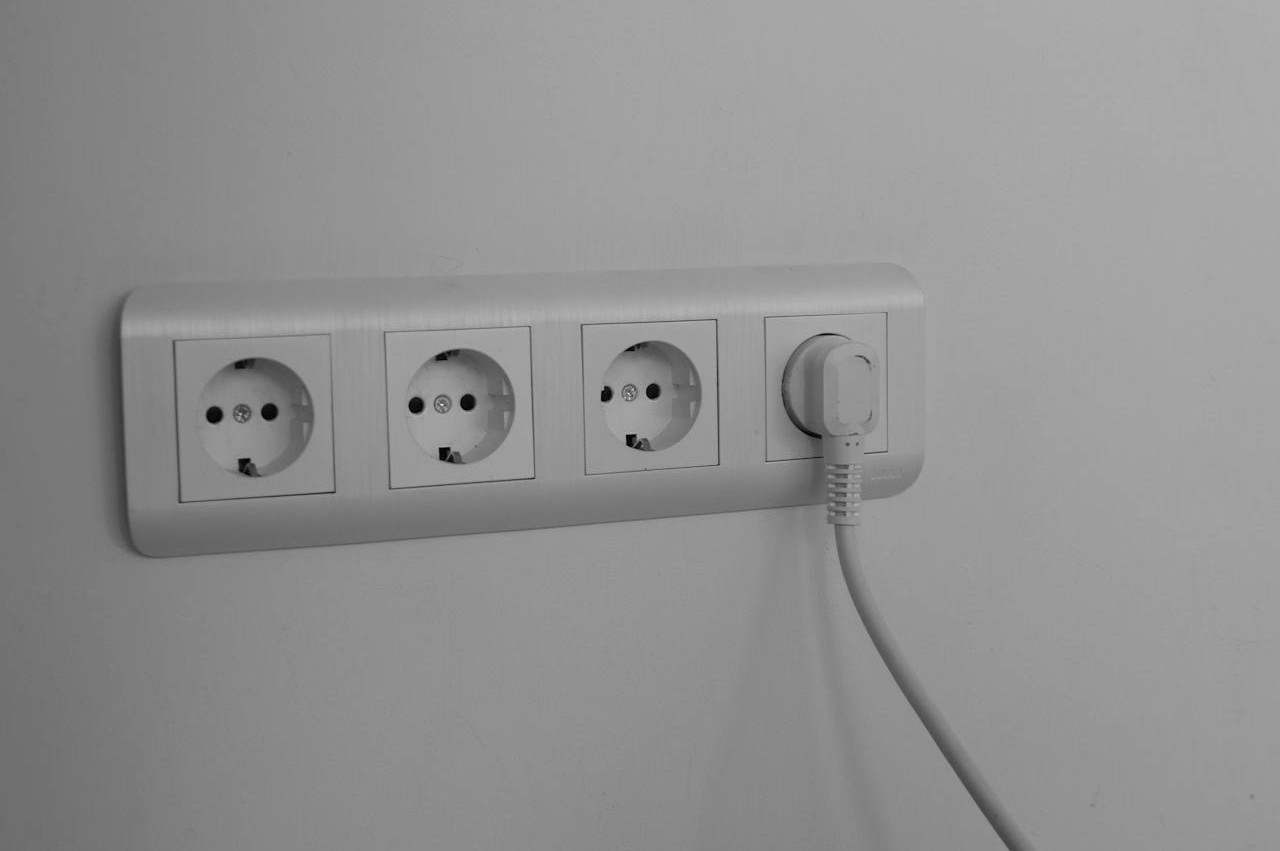
A strip can make a room look like it has more power than it does. Extra outlets feel like extra capacity, even though everything still runs through one circuit. Chargers, speakers, a printer, and a monitor can add up fast when devices cycle on and off. Many strips are rated 15 amps total, not per socket.
Adapters that split one outlet into several multiply clutter, not capacity, and they can loosen the connection. Heat is the clue: cords that feel warm, a strip that hums, or a breaker that trips after the same routine. When the load is planned and spread across circuits, the strip stops acting like a bottleneck quietly.
Using Strips Where Moisture Lingers
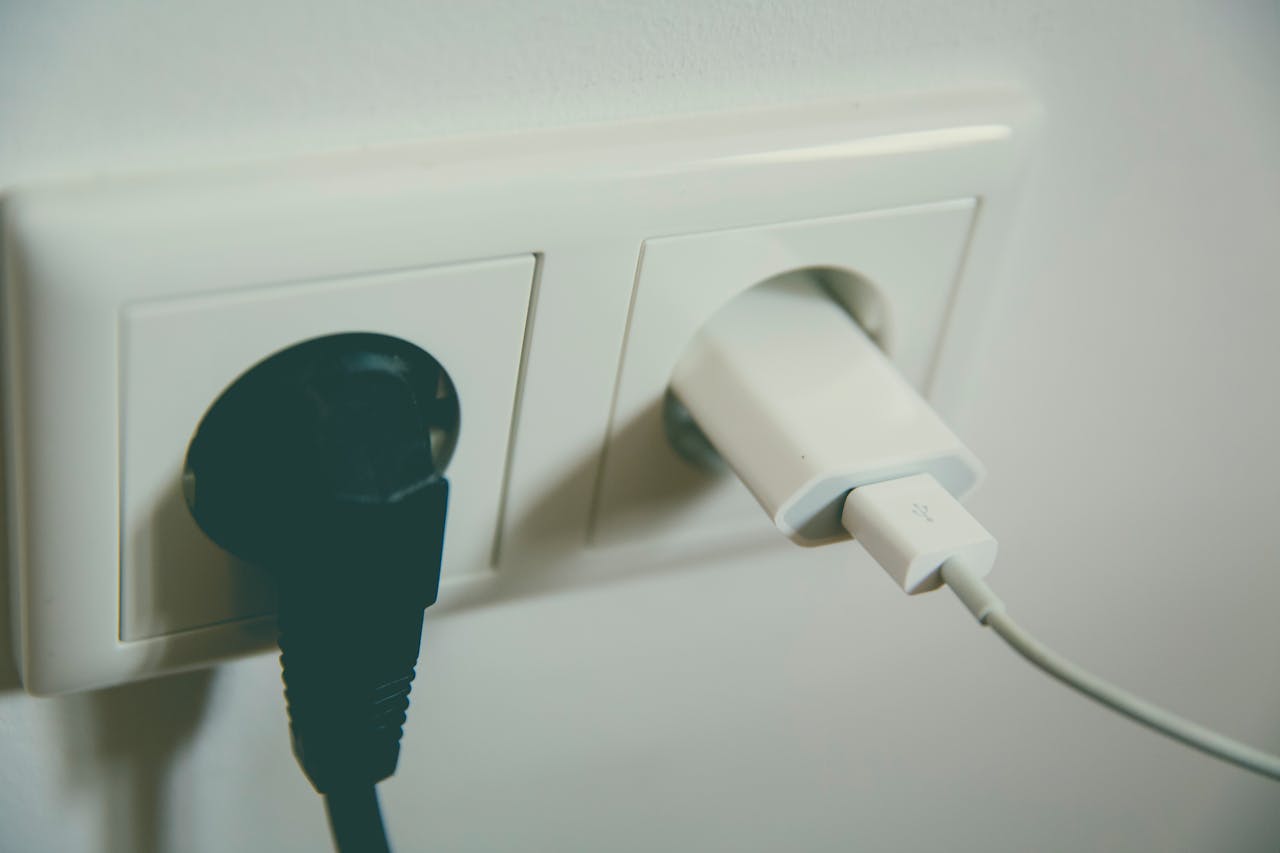
Moisture changes the rules, even when a room does not look wet. Kitchens, bathrooms, basements, garages, and patios bring humidity, splashes, and condensation that slowly corrode contacts over years. Steam from a shower or a simmering pot can settle inside outlet slots.
A strip left on concrete or near a sink collects grime that holds moisture at the outlets. Aquariums, mop buckets, and leaky windows add drips that can travel along cords. Corrosion weakens the metal grip, raising resistance and heat during normal use. GFCI protection, elevation off the floor, and equipment rated for damp locations reduce that silent strain.
Turning Extension Cords Into Permanent Wiring
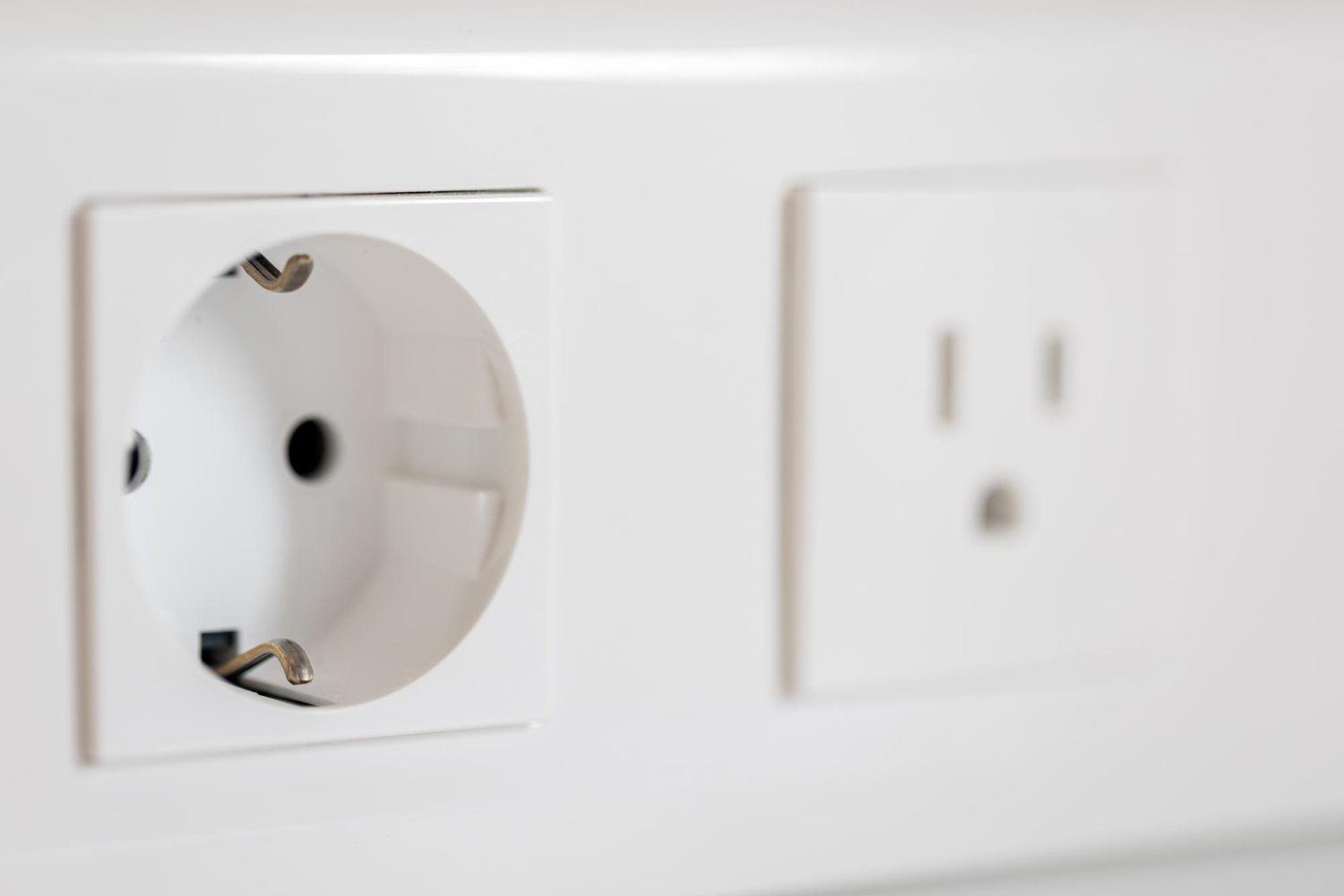
An extension cord feeding a power strip often turns a temporary fix into permanent wiring. Long runs add resistance, and that resistance turns into heat, especially with thin cords and crowded circuits during cold spells. The wall outlet still carries the full load.
Coiled slack under a desk traps warmth, while chair wheels and door edges nick insulation over time. Strain at the plug end is common because the cord pulls on the blades. Over months, connections loosen and the system becomes touchy, with flickers or nuisance breaker trips. A heavier-gauge cord for short use, or a new outlet for daily use, keeps it stable for years.
Mounting Strips Improperly And Forgetting They Wear Out
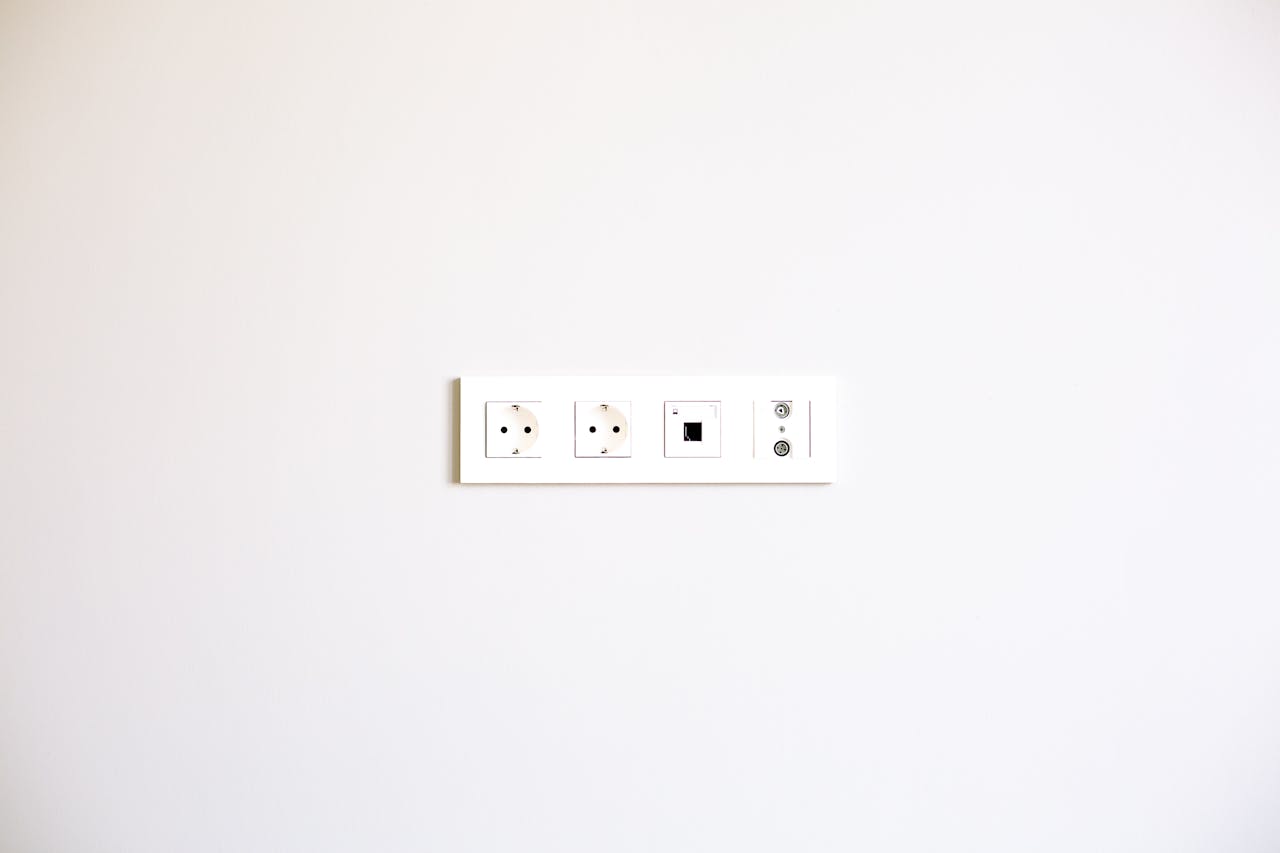
Strips get treated like fixtures: taped to a cabinet, wedged under a counter, or pinned where cords pull at odd angles. That kind of mounting can crack the case, bend plug blades, and strain the cord where it enters the housing.
Dust around outlets holds heat, and surge protectors can lose protection after repeated surges, even while outlets still work. Mounting with the built-in slots and keeping cords relaxed helps the strip run cooler. A sticky switch, a loose socket, or a dead indicator light should be read as wear, not convenience. When strips stay accessible and get replaced on time, power stops being guesswork.