Some romances did not fail because the feelings ran out. They faltered because the law arrived first. Across centuries and borders, governments tried to police intimacy by defining which bodies could marry, which households could form, and which private acts could be punished. The reasons shifted: race, religion, empire, morality, and the fear of losing control. Yet the pattern stayed familiar. Two people would build an ordinary life, then discover that vows, beds, letters, or a shared address could trigger fines, prison, exile, or worse. These stories trace the long arc from prohibition to recognition, and the stubborn hope that kept love visible even when it had to hide. In each, affection becomes a quiet act of resistance.
Plural Marriage Branded a Crime in the U.S. West

In the American West, some communities framed plural marriage as faith and family, while the federal government framed it as a crime that challenged social order. Congress passed the Morrill Anti-Bigamy Act on July 1, 1862, then tightened enforcement with later laws such as the Edmunds Act, which punished polygamy and “unlawful cohabitation,” turning households into targets for courts and marshals in Utah Territory and beyond. Prosecutions, prison terms, and the threat of losing homes did not erase affection, but they did fracture families, and the long legal battle still shapes how plural love is argued over today.
Unmarried Love Under the Comstock Shadow

Plenty of love stories begin before a ring, but for generations, the law tried to make unmarried desire both shameful and punishable. The 1873 Comstock Act and related state laws treated contraception and even information about it as obscene, and some statutes drew a hard line between married and unmarried people, forcing relationships into risk, secrecy, or rushed vows. On March 22, 1972, “Eisenstadt v. Baird” extended contraceptive access to unmarried adults, tying privacy to equal protection and easing the legal pressure that had hovered over dating, engagement, and early partnership for young adults starting out.
Romance Outlawed by the Nuremberg Laws

In Nazi Germany, a relationship could be judged not by devotion, but by ancestry charts, records, and the gossip of neighbors eager to prove loyalty. After the Sept. 15, 1935 Nuremberg Laws, the Law for the Protection of German Blood and German Honor banned marriages and criminalized many intimate relationships between Jews and so-called Aryans, making couples vulnerable to arrest, forced separation, and public shaming. Engagements were broken by decree, families were pressured to disown, and simple acts like holding hands in public carried risk, because the regime turned private tenderness into a political offense.
Andrea Perez and Sylvester Davis, California

In 1948 Los Angeles, a county clerk refused a marriage license to Andrea Perez and Sylvester Davis because California’s Civil Code said marriages between white people and groups labeled “Negroes,” “Mongolians,” or “Malay” were illegal and void, a ban on the books since 1850. The couple wanted a Catholic ceremony, but the statute treated race as a disqualifier that followed them from the courthouse to the altar. On Oct. 1, 1948, the California Supreme Court decided “Perez v. Sharp,” becoming the first state high court to strike down an interracial marriage ban, foreshadowing the logic later embraced in “Loving v. Virginia.”
Interracial Love Under Apartheid South Africa

In apartheid South Africa, love could be policed with paperwork and midnight knocks, because the state treated race mixing as a threat to the entire social order. The 1949 Prohibition of Mixed Marriages Act barred interracial weddings, and the Immorality laws criminalized sexual relationships across the color line, so passbook checks, police raids, informants, and courtroom humiliations became part of a couple’s private life. Even when feelings were steady, the law demanded secrecy: a shared room, a stray letter, or a neighbor’s report could mean arrest, until Parliament repealed these bans in 1985, as apartheid cracked.
Richard and Mildred Loving, Virginia
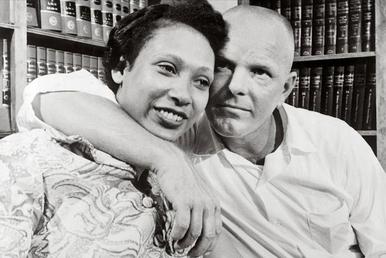
Two newlyweds returned to rural Virginia in 1958, and the state treated their marriage like contraband: police raided their bedroom, and prosecutors leaned on anti-miscegenation statutes that made a Black-and-white union a crime, threatening jail and forcing the couple to live apart from home, family, and work. Nearly a decade later, on June 12, 1967, “Loving v. Virginia” struck down state bans on interracial marriage, impacting the remaining 16 states with such laws, ending the power of clerks to deny licenses based on race, and reframing marriage as a fundamental right rather than a privilege rationed by segregation.
Two Men Before the Sexual Offences Act, England and Wales

In mid-century Britain, two men could share affection for years and still fear that a knock at the door might end it. Under laws criminalizing “gross indecency” and sodomy, relationships were pushed into coded letters, late-night walks, and careful silences, while the vague wording worked like a blackmailer’s charter. After the Wolfenden Report argued that private morality was not the law’s business, the Sexual Offences Act received Royal Assent on July 27, 1967, partially decriminalizing sex between men in England and Wales if it was private and both were 21 or older, with Scotland and Northern Ireland following later.
Same-Sex Couples Under Section 377, India

In colonial-era legal codes, intimacy could be labeled an “unnatural offence,” and the stigma outlived the empire that wrote it. Section 377 of the Indian Penal Code, introduced in the 1860s, criminalized certain sexual acts and was often used to harass, threaten, or blackmail same-sex couples who wanted ordinary companionship without public scrutiny. On Sept. 6, 2018, the Supreme Court of India in “Navtej Singh Johar v. Union of India” decriminalized consensual same-sex conduct between adults while keeping provisions for minors and nonconsensual acts, shifting the story from secrecy toward equal citizenship in law.
Same-Sex Partners Under Sodomy Statutes, United States
Across much of the United States, same-sex couples built lives under sodomy statutes that could make intimacy prosecutable, even when enforcement was uneven, shaping where couples held hands, how they answered landlords, and what they told employers. In 1986, “Bowers v. Hardwick” upheld one such law, and the decision lingered as a warning that the state could still claim the bedroom as its turf. In 2003, “Lawrence v. Texas” reversed that logic, striking down bans on consensual same-sex intimacy, restoring constitutional privacy, and helping clear legal ground for the marriage fights that followed in many states nationwide.
Debora Hobbs and a Crime Called Cohabitation, North Carolina

A couple does not have to dislike marriage to want time, money, and certainty before it. In some places, that hesitation was once treated as delinquency. North Carolina’s 1805 cohabitation statute made it a crime for an unmarried man and woman to “bed and cohabit” together, a moral law that could be pulled off the shelf when someone in power wanted leverage. In July 2006, after Debora Hobbs was pressured to marry or move out, a Pender County judge struck the rarely used 201-year-old ban as unconstitutional, citing “Lawrence v. Texas” and helping move intimacy out of the criminal code and back into ordinary life quietly.
Edith Windsor and Thea Spyer, United States

For some couples, the law did not merely deny a wedding; it denied the meaning of a life built together, insisting that decades of care were legally irrelevant. Edith Windsor and Thea Spyer had their marriage recognized by New York in 2008, yet when Spyer died in 2009, the Defense of Marriage Act blocked Windsor from the federal spousal estate tax exemption, turning mourning into a tax bill and a lawsuit. On June 26, 2013, “United States v. Windsor” ruled that DOMA’s Section 3 violated the Constitution, unlocking federal recognition for many same-sex spouses and clearing a path toward nationwide marriage equality.
Jim Obergefell and John Arthur, United States

A different kind of urgency shaped the love story at the heart of “Obergefell v. Hodges”: a partner was dying, and state law still said the marriage could be treated as nonexistent, affecting hospitals, paperwork, and recognition. Jim Obergefell married John Arthur in 2013, yet Ohio refused to recognize the union on Arthur’s death certificate, a final erasure that pushed their private grief into a public fight. On June 26, 2015, the Supreme Court held that the Fourteenth Amendment requires states to license and recognize same-sex marriages, turning a patchwork of permission into a nationwide promise of equal dignity.