Some towns seem named by someone who liked fog, old maps, and a good dare. Most of the time, the truth is more human: a harsh landscape, a river bend, a courtroom panic, or a story repeated until it hardens into local fact. History and folklore braid together, and a place name becomes mood, warning, and invitation at once. That is why a mining camp can sound like a headstone, why a quiet village can borrow a headless rider, and why a plain station can turn into a legend magnet. On the page the words look playful, but they often point to loss or pride. These names travel because they carry their own backstory, even when daylight looks ordinary.
Sleepy Hollow, New York
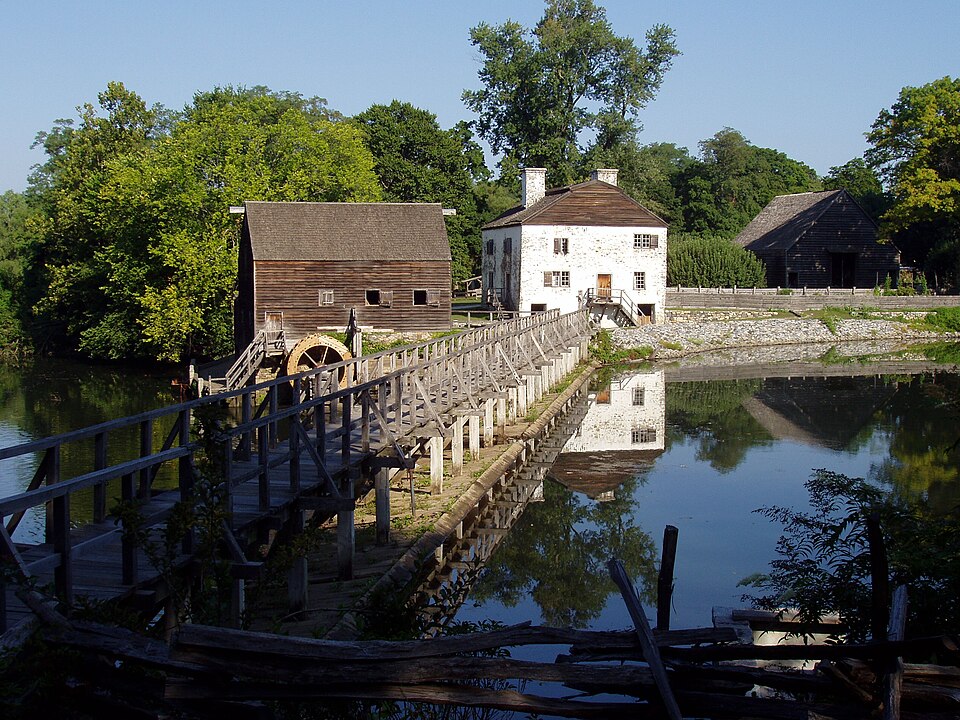
Sleepy Hollow earns its chill from Washington Irving’s 1820 tale “The Legend of Sleepy Hollow,” where a Headless Horseman turns a quiet Hudson Valley lane into a place people walk faster. The village made that shadow official in 1996, choosing Sleepy Hollow over North Tarrytown so the name matched the mood. The Old Dutch Church and its churchyard, plus the nearby cemetery where Irving is buried, keep the story planted in real soil. By October, lantern tours, costumed riders, and leaf-slick roads do not just reenact scenes, they recruit the night air, so even a simple bridge crossing feels like a small test of nerve at dusk alone.
Salem, Massachusetts
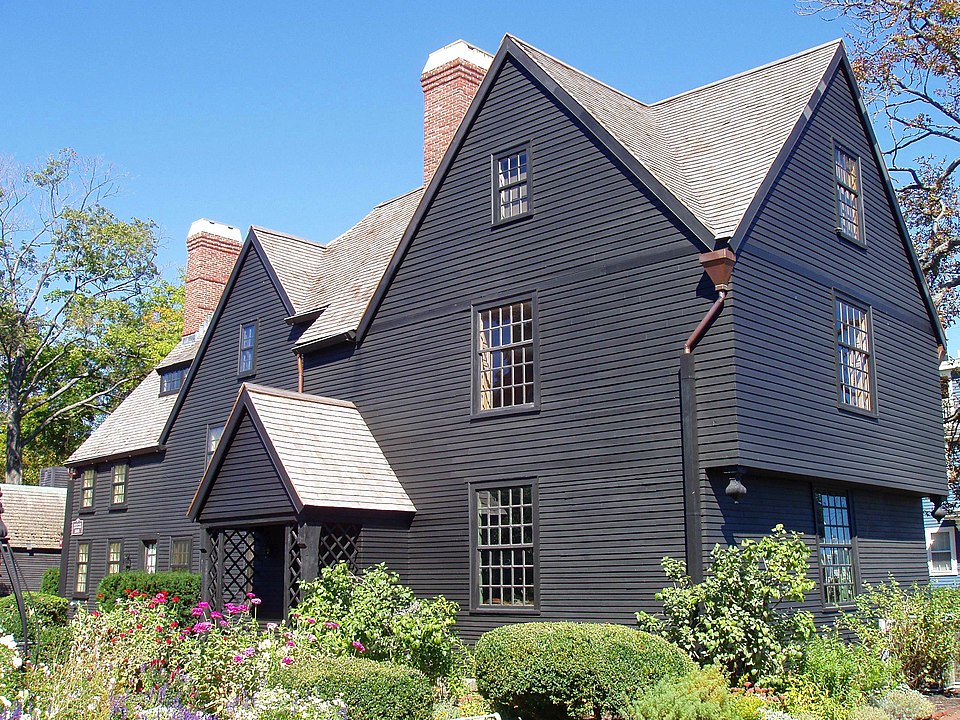
Salem’s name is calm, but its history is not. In 1692, a wave of accusations and trials in Salem Village and nearby courts ended with 19 people hanged and one man pressed to death, a lesson in how fear can dress itself as certainty. Sites like the Witch House, linked to Judge Jonathan Corwin, keep the era close, even as the seaport’s maritime past competes for attention. Over centuries, court records, sermons, novels, and films kept the story circulating, so the city now holds two identities at once: saltwater commerce and a darker afterimage that returns each fall with candlelight, crowds, and questions that never leave.
Tombstone, Arizona
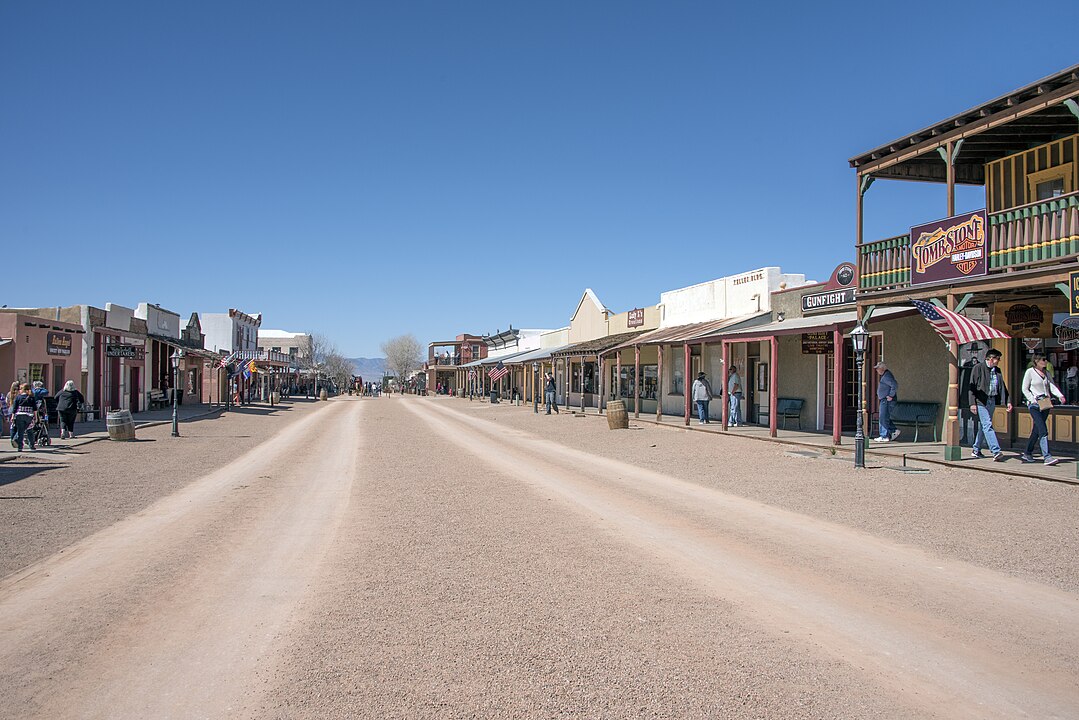
Tombstone sounds like a warning, and its origin story leans into that drama. In 1877, scout Ed Schieffelin was told that the only stone he would find in Apache country was his tombstone, yet he filed a silver claim and used the insult as a name. The word fit the boomtown that followed: saloons, sudden money, and deaths serious enough to fill Boot Hill. Then came the O.K. Corral gunfight mythology, which welded the place to frontier legend. The motto The Town Too Tough to Die keeps the swagger alive, while Allen Street reenactments, creaking boardwalks, and desert sunsets make the bravado feel present after dark for anyone listening.
Deadwood, South Dakota
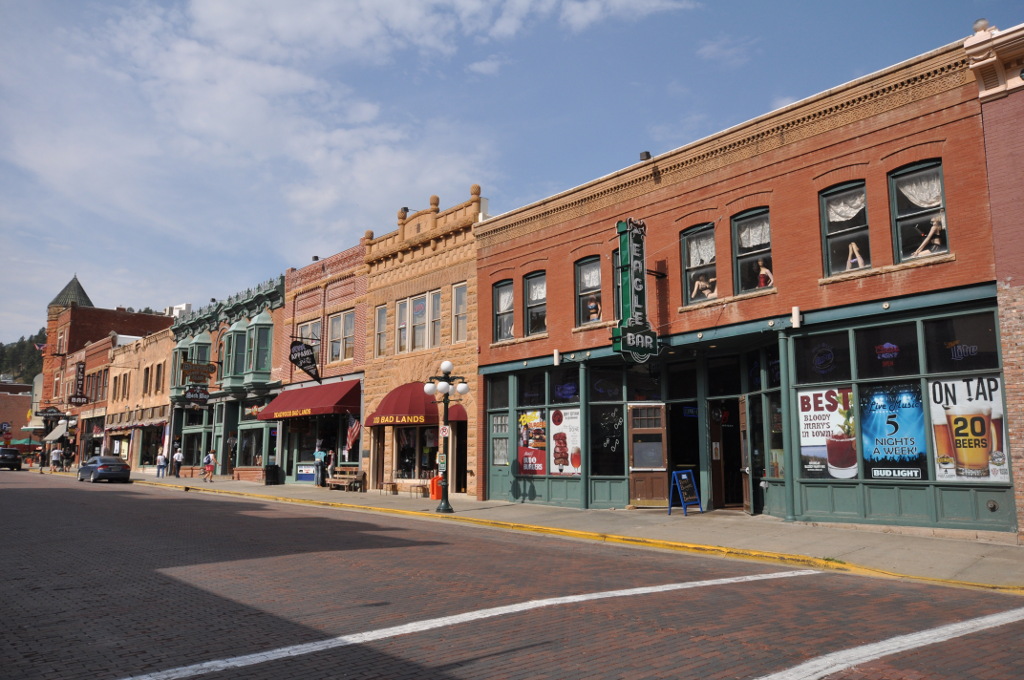
Deadwood was reportedly named for the dead trees scattered through the gulch when early prospectors arrived, a blunt description that matched the Black Hills canyon they pushed into during the 1876 gold rush. The camp swelled fast, and so did its reputation: gambling, saloons, and violence enough to make the word feel less like scenery and more like prophecy. Stories of Wild Bill Hickok and Calamity Jane cling to the town’s early days, while repeated fires in the 1800s and 1900s forced rebuilding that never erased the edge. Even in daylight, boardwalks and steep streets make the name sound like a warning nailed to timber today.
Hell, Michigan
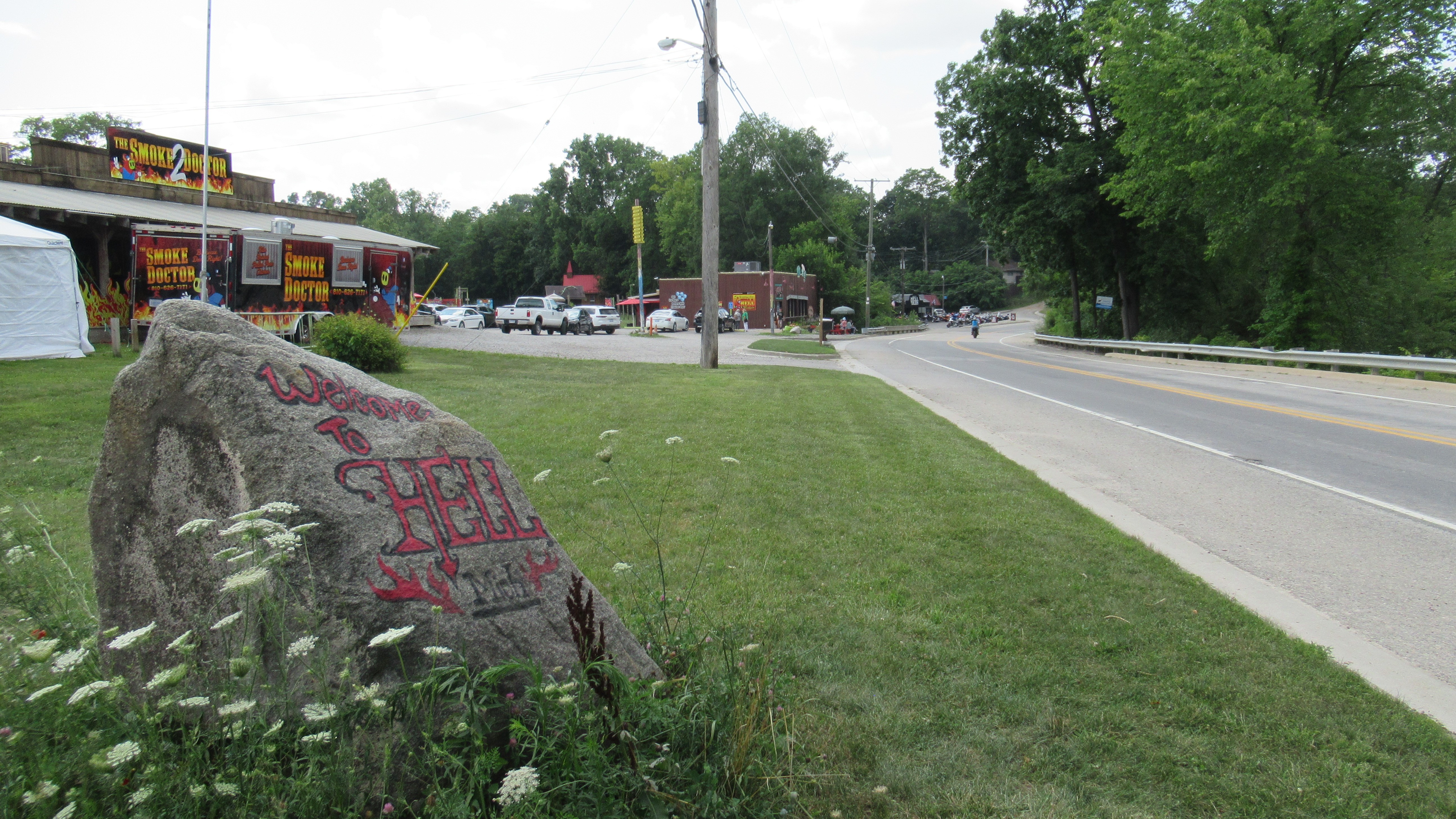
Hell, Michigan is small, wooded, and committed to the punchline. The exact origin is murky, with local retellings ranging from a founder’s shrugging remark to the idea that the swampy, mosquito-heavy area felt punishing enough to earn the name. That uncertainty is part of the charm, because it lets the town keep rewriting the joke without breaking it. Souvenir stamps, sign photos, and winter quips about Hell freezing over do the marketing. Close enough to Ann Arbor for an easy detour, it draws day-trippers who come for a laugh then notice how quiet the trails and water are, and how the sign makes ordinary pine shade feel theatrical.
Hell, Norway
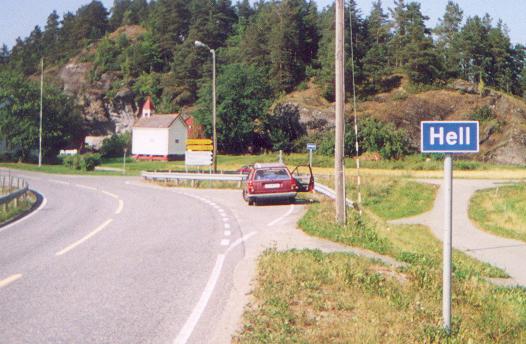
Hell in Norway looks like a prank in English, but the meaning is older and practical. The name is tied to Old Norse hellir, often explained as an overhang or cliff cave, proof that place names can be literal long before they are funny. That mismatch turned the rail station sign in Trøndelag into a celebrity, especially when winter snow makes the letters pop. Commuters still move through as usual, but visitors pause for photos, tempted to treat the word as a dare. The landscape does the quieter work: river water under ice, low rock faces, and early dark that presses close, so the joke and the geology end up telling the same story.
Skull Valley, Arizona
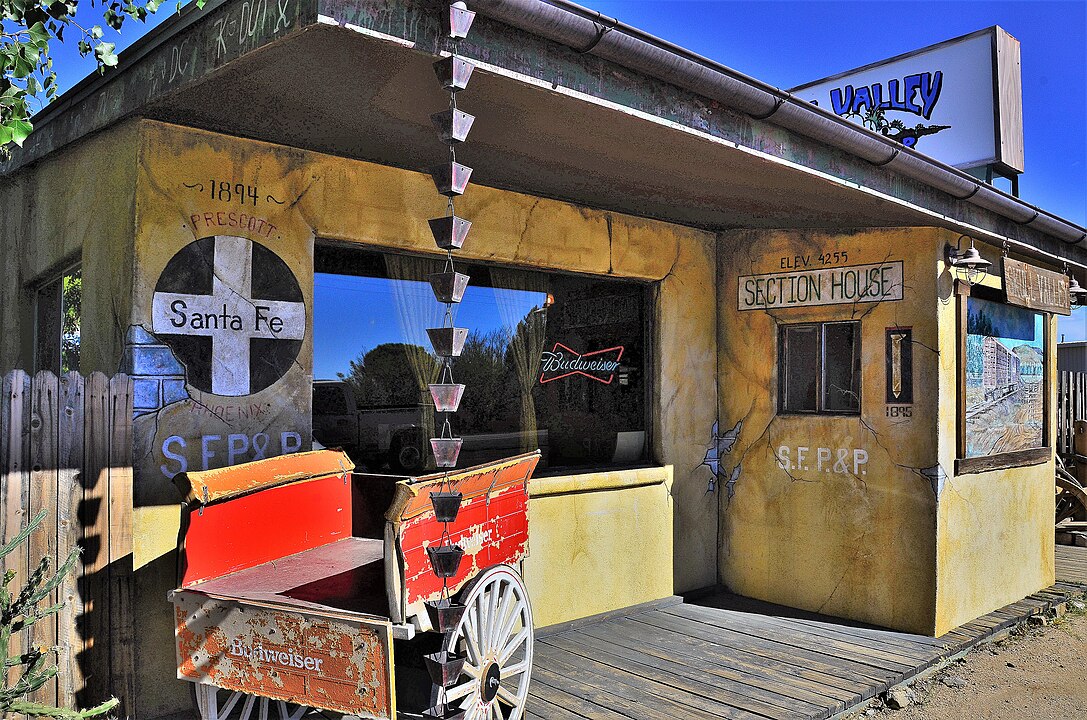
Skull Valley, Arizona sounds like a warning posted at the county line. Local histories offer more than one explanation, but a commonly repeated origin says an early traveler found piles of bleached Indigenous skulls in the valley, and the description spread. Whether later retellings sharpened the horror or not, the name does its work immediately: ranch fences, open sky, and quiet hills start to feel charged. It also hints at what many place names hide in plain sight, conflict and loss that were easier to label than to face. In a landscape built on distance, one grim word can make every empty mile feel watched, even at noon there.
Devils Elbow, Missouri
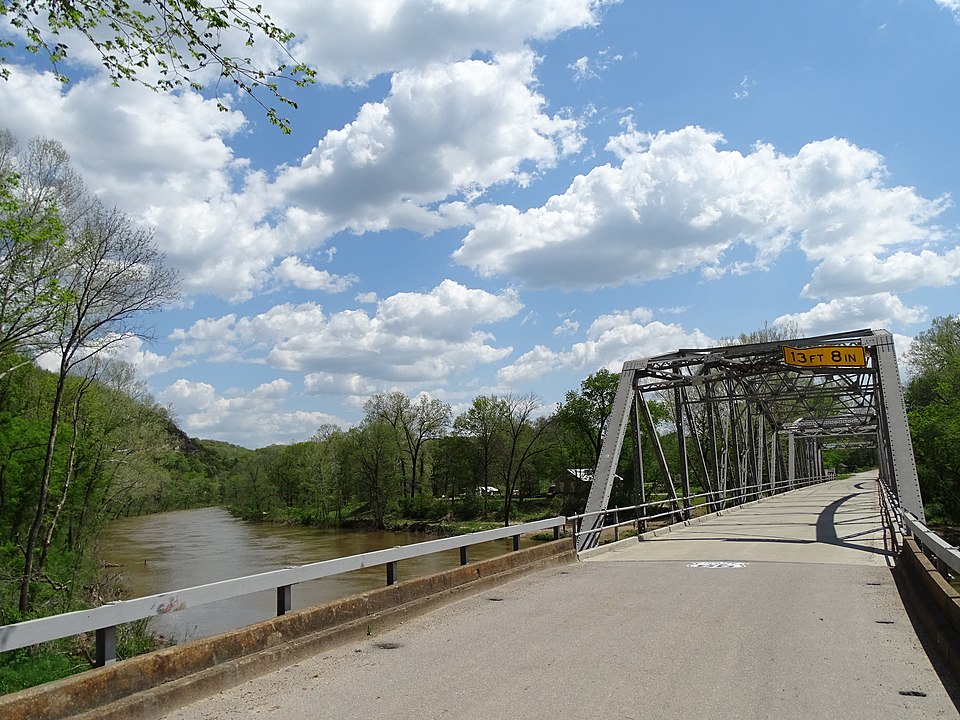
Devils Elbow, Missouri, takes its name from a sharp bend in the Big Piney River, a curve that boaters and rafters learned to respect. Before it became a Route 66 waypoint, the bend was a working problem for lumbermen who floated logs and railroad ties downstream, because one bad angle could crack a raft and scatter wood like dice. Geography became the villain, so the word devil stuck. With the highway came postcards, stories, and the bridge, which made the nickname travel farther than the town ever did. On humid evenings, when water goes dark under the trees, it is easy to see why people blamed the bend for bad luck year after year.
Death Valley Junction, California
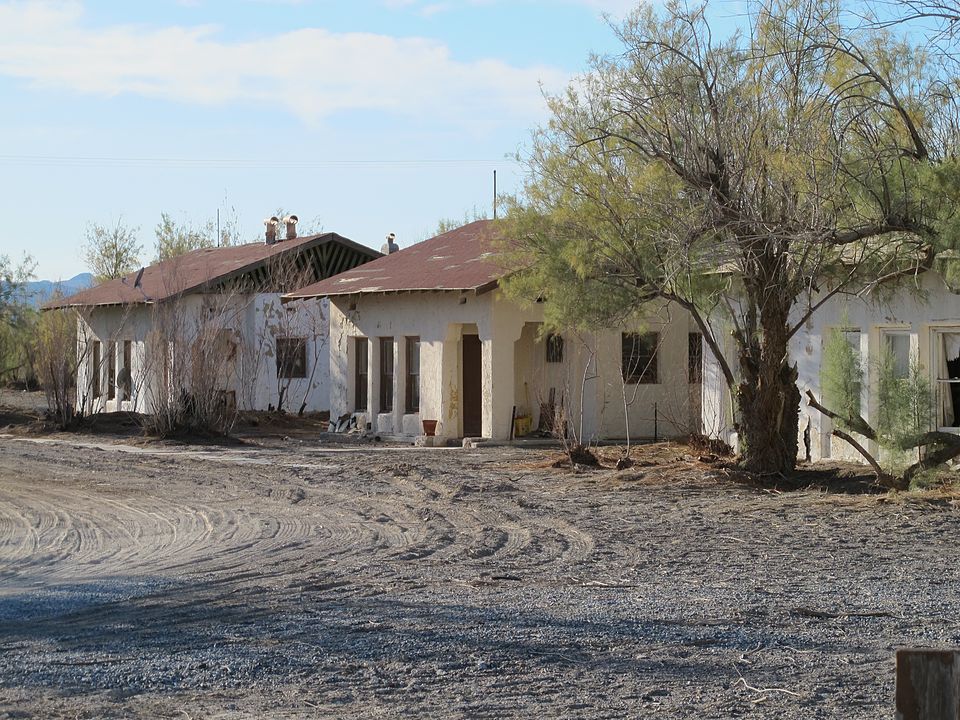
Death Valley Junction sounds final, but it began as a practical stop at a desert crossroads, tied to mining and rail lines that served borax work. The settlement’s identity hardened because the surrounding valley already carried a reputation for heat and emptiness, so the word Death did not need much help. What makes the place feel uncanny today is the Amargosa Opera House and Hotel, revived by dancer Marta Becket after a 1967 breakdown stop, its walls painted with an audience that never speaks. In a town with few residents, those faces become a kind of company after dark, and the junction feels like a stage waiting for footsteps.
Dead Man’s Flats, Alberta
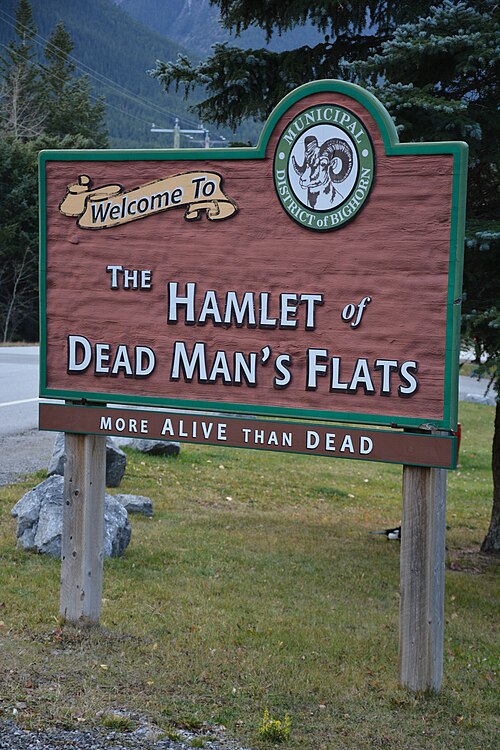
Dead Man’s Flats, Alberta, sits near Canmore with a name that refuses to settle into one tidy origin story. Local accounts argue over whether it points to a 1904 killing in the Bow Valley or to an older tale about people feigning death to escape danger, and the uncertainty keeps the legend alive because no single version has to win. The hamlet adopted the name in 1985, long after earlier labels faded, so the choice feels deliberate, like a community deciding to own its whisper. With wind, river fog, and headlights cutting through spruce, the phrase sounds less like shock value and more like a rumor the landscape keeps repeating.