
Beach towns, heatwaves, and quick errands can make flip-flops feel like the obvious choice. But across many road codes, the real issue is not fashion. It is control. When a loose sandal slides, folds, or catches under a pedal, a routine drive can turn into a preventable hazard. It often surfaces after a near-miss or an abrupt stop. Some countries spell the duty out in black-and-white rules. Others rely on broad standards about staying able to perform maneuvers without delay, maintaining freedom of movement, and avoiding any act that undermines safe driving. The fine, when it comes, is usually written for careless or unsafe handling, with the footwear noted as the cause. Summer comfort is easy. Road control is nonnegotiable.
France

French road rules focus on readiness, not footwear labels. If a flip-flop slides, hooks a pedal, or dulls braking pressure, an officer can treat it as proof that the driver was not constantly in a condition and position to carry out required maneuvers conveniently and without delay, with full freedom of movement. That broad duty fits real life: tight village lanes, Paris ring-road merges, and summer traffic near the coast, where a near-miss or abrupt braking during Jul. and Aug. holiday surges on busy routes can prompt a stop, a ticket, and a note that the driver chose footwear that invited risk.
Spain

Spain’s summer driving culture has a familiar look: coastal roads, stoplights near the paseo, and drivers stepping out in beachwear. The Reglamento General de Circulación still demands one thing above all: freedom of movement, the necessary field of vision, and constant attention so the vehicle can be handled safely. If flip-flops make a foot slip, fold, or snag, the issue is treated as lost control, and a roadside stop can turn into a fine after a sudden brake at a roundabout or crosswalk in hot, peak holiday traffic, because the rule gives officers wide discretion when safety looks compromised.
Italy
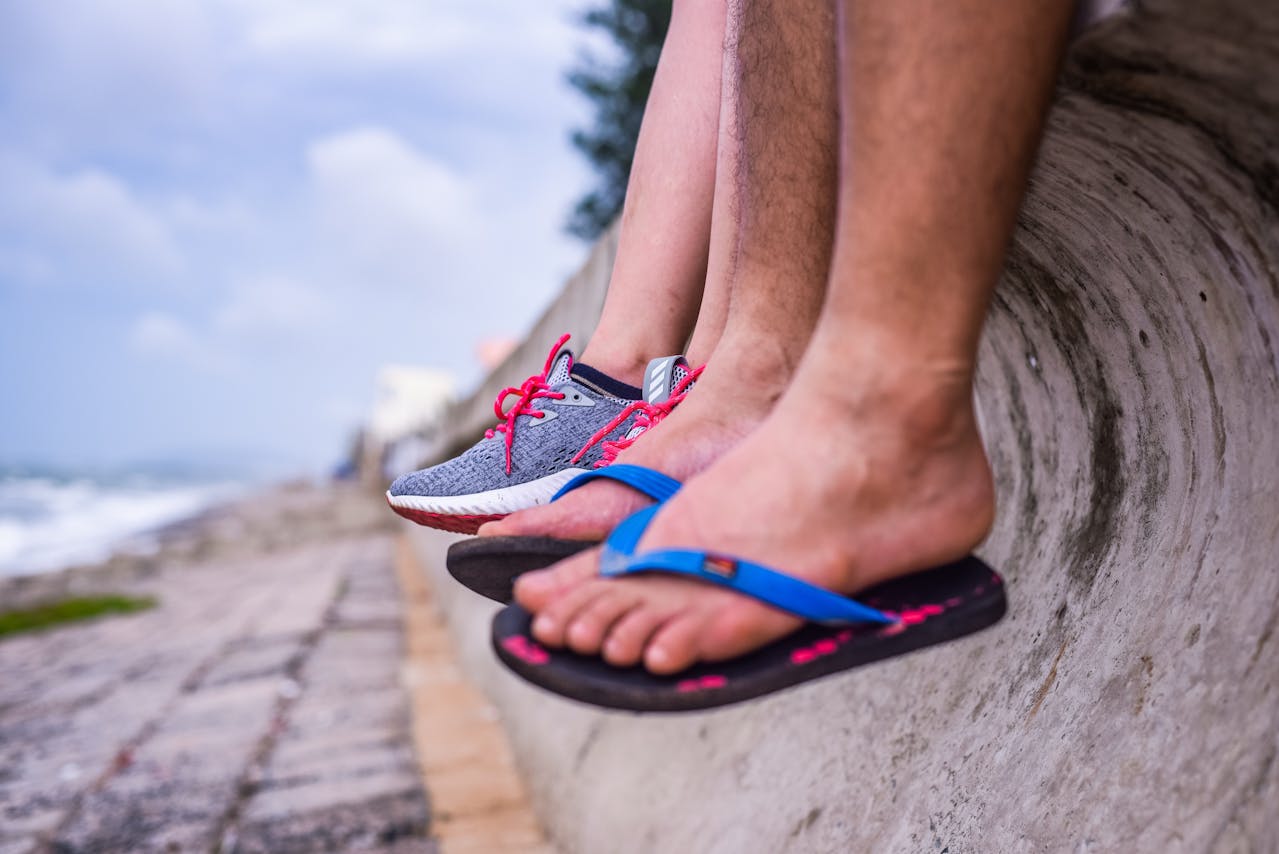
Italy does not name flip-flops as a stand-alone offense, but the duty to keep control is explicit. ACI points to Article 141, which requires the driver to maintain control and complete necessary maneuvers, especially a timely stop, in safe conditions. That matters on slick cobblestones after an afternoon storm, on ring roads thick with scooters, and on narrow coastal switchbacks where a loose sandal can twist underfoot. After jerky braking or a close call in Ferragosto gridlock, the footwear can be written up as the detail behind unsafe handling, and the stop can end with a fine for lack of control.
United Kingdom

In the United Kingdom, flip-flops are not illegal on their own, which is why the myth returns every heatwave. The Highway Code warns that clothing and footwear must not prevent the controls from being used correctly, and that guidance can feed into charges such as careless driving or failing to be in proper control when something goes wrong. Wet motorway service areas after a coastal stop, tight mini-roundabouts, and sudden braking behind a bus can turn a shifting sandal into the detail that supports a fine and penalty points if the case escalates, especially when noted in a report.
Germany

Germany’s rules do not ban flip-flops by name, but the expectation is simple: the vehicle is to be controlled cleanly, every time. ADAC warns that loose sandals can snag on pedals or reduce the force applied, a problem that shows up in sudden braking, on rain-slick tram tracks, in tight Baustelle lanes, or when stop-and-go traffic turns into a hard stop. If an incident or roadside check follows, the footwear can become evidence of negligence and lead to penalties and insurance reductions once authorities decide control was impaired, which is a rough lesson to learn at Autobahn speeds, in seconds.
Austria

Austria’s summer roads invite casual footwear, but the ÖAMTC frames flip-flops as a risk with real legal consequences. Their guidance is blunt: driving with Flip-Flops and similar footwear is not automatically forbidden, yet the car must only be used in a condition where it can be safely controlled. If an accident is at least partly caused by unsuitable shoes, the police report may note it, and consequences can follow through fault findings, fines, or compensation claims. Alpine descents, Vienna ring-road merges, and tunnel braking leave little room for a foot that can slide at speed, without warning.
Switzerland

Switzerland’s roads reward precision, and the legal language matches the culture. The Federal Road Traffic Act requires drivers to remain in control of their vehicles at all times, which is why footwear becomes relevant the moment it interferes with a maneuver, even briefly. On hairpin passes above the lakes, in valley fog, or in tunnel traffic near Zürich, a flip-flop that shifts can turn a smooth descent into a clumsy brake. When that happens, the sandal is no longer a vacation detail; it is part of the explanation for unsafe handling, and a fine can follow once control is judged to have slipped.
Netherlands

In the Netherlands, the legal test is blunt: did the driving create danger or hinder traffic? Article 5 of the Wegenverkeerswet forbids behavior that causes, or could cause, danger on the road or obstructs other road users, which gives officers room to act when a driver looks out of control. Flip-flops become relevant when they turn a smooth stop into a stumble at a fietsstraat crossing, or when a loose sole catches a pedal in canal-side traffic where bikes, trams, and cars share tight space. The ticket, when it comes, is for the risky outcome, not for the footwear itself during busy rush hour.
Portugal

Portugal’s summer tempo makes flip-flops feel inevitable, from seaside parking lots to quick drives between cafés. The Road Code frames it as a safety duty: drivers must refrain from acts that could prejudice safe driving, giving officers room to judge anything that interferes with control. On Lisbon’s steep starts, in the slick shine of old cobblestones, or on tight Algarve roundabouts, a sandal that slips or catches can be treated as the detail behind unsafe handling after a near-miss or abrupt brake, and a fine can follow once the maneuver looks compromised in dense summer traffic and in the report.
Brazil

Brazil is one of the clearer cases: the traffic code treats inappropriate footwear as an offense, not just a safety worry. The Código de Trânsito Brasileiro requires a driver to keep full command of the vehicle, and it also lists driving while wearing footwear that does not fit the feet or compromises use of the pedals as a specific violation. On BR highways, in São Paulo’s stop-and-go, or in beach-town shortcuts packed with motos, that clarity matters: a flip-flop is not merely frowned upon; it can support a ticket, especially during holiday surges when policing tightens, for safety.