
Nearly 90 years after Amelia Earhart vanished, the newest momentum in the case circles back to the same fragile moment over the Pacific. A rebuilt 1930s-style radio system and fresh modeling revived hope, yet the core clues remain the Itasca log, the 157-337 line, and a narrowing fuel clock.
What feels new is confidence around probabilities, not a recovered aircraft. What feels familiar is the architecture of the argument: reconstruct the last signals, map likely drift and course choices, then test old assumptions against better tools and bigger datasets. The mystery moves forward by revisiting 1937 from a sharper angle.
A New Claim Lands on an Old Clock

In Aug. 2025, Nauticos announced that restored testing with equipment matching Earhart-era systems helped estimate the Electra’s approximate position at 8:00 a.m. on July 2, 1937. The team presented the update as a major narrowing of the search area and framed it as the strongest launch point yet for a fourth expedition.
Even in that optimistic framing, the claim stays probabilistic. The release describes a likely resting zone, not identification of wreckage, and the case still depends on reconstructing behavior from partial radio conditions. The lead is meaningful, but it remains an inference built from layered assumptions.
The Itasca Log Still Carries the Weight

The most durable evidence is still the radio log from July 2, 1937. At 7:42 a.m., Earhart reported she was close but could not see Howland, that fuel was running low, and that radio contact had failed repeatedly. At 8:43 a.m., she transmitted that the aircraft was on line 157-337 and running north and south, then went silent.
That line has anchored decades of search planning because it is concrete, time-stamped, and tied to the Itasca’s operational record. But it is also narrow in what it can prove: heading and distress are visible, exact coordinates are not. The modern search story still rises and falls on that final geometry.
Re-creating the Airwaves, Not Recovering the Plane

The technical centerpiece is reconstruction: radio tests with period-correct or equivalent components, plus aircraft and vessel coordination to echo 1937 communication limits. Project reporting says researchers used direction-finding and signal-strength methods to estimate where Earhart’s transmissions fit near the final window.
The approach is disciplined and stronger than rumor-driven speculation. Still, it cannot become proof alone. Re-creation can tighten probabilities, yet it cannot replace debris, serial numbers, or a photographed airframe. In practice, it guides where crews search next; it does not close the case by itself.
Big Search Footprints, Small Certainties

The history of effort matters as much as the newest model. Nauticos says it conducted expeditions in 2002, 2006, and 2017, and that combined coverage with the Waitt Institute’s 2009 work reached 3,610 square miles without locating the aircraft. That record tempers breakthrough language because credible searches still return ambiguity.
At the same time, each pass produces bathymetry, sonar context, and elimination data that sharpen later plans. Search science rarely moves in cinematic reveals; it advances through subtraction. The current claim sits inside that long arc, where better boundaries are progress, but not yet resolution.
Rival Hypotheses Keep the Pacific Wide

Competing lines of inquiry keep the map unsettled. In early 2024, Nauticos questioned a sonar target promoted by another team, arguing the shape and position did not match a Lockheed Electra and that long-range sonar can mislead in complex geology. The dispute showed how quickly optimism can split into rival interpretations.
A separate Purdue-linked mission aimed at Nikumaroro was postponed to 2026 after added Kiribati clearances and cyclone timing blocked a 2025 departure. Even projects are slowed by permits, weather, and logistics. The mystery persists not from neglect, but from how hard verification is in remote ocean terrain.
Declassified Files Added Breadth, Not Finality

Another recent turn came through paperwork, not seabed imaging. In Nov. 2025, the U.S. government released thousands of pages tied to Earhart, part of a long pressure campaign for declassification. The move broadened access to historical records and sharpened public attention again without producing a definitive physical clue.
That pattern explains the current mood: more data, better transparency, and still no closure. Documents can challenge myths, refine timelines, and expose old analytical gaps, but they cannot identify a wreck site by themselves. The case keeps expanding in detail while remaining unresolved at its core.
Fuel Math and Line 157-337 Keep Returning

The familiar assumptions are clear: Earhart neared Howland, could not secure reliable bearings, then exhausted fuel near the final transmission window. Nauticos leans on that fuel-endurance logic and on consistency with the 8:43 a.m. line report, arguing there is little chance she ditched far west in a dateline scenario.
These assumptions are grounded in documented radio chronology, but they remain assumptions. Missing variables are still large, including winds aloft, cockpit decision timing, and what happened after communication ended. The renewed search is strongest when it treats these as probabilities, not settled facts.
Why the Story Still Circles 1937
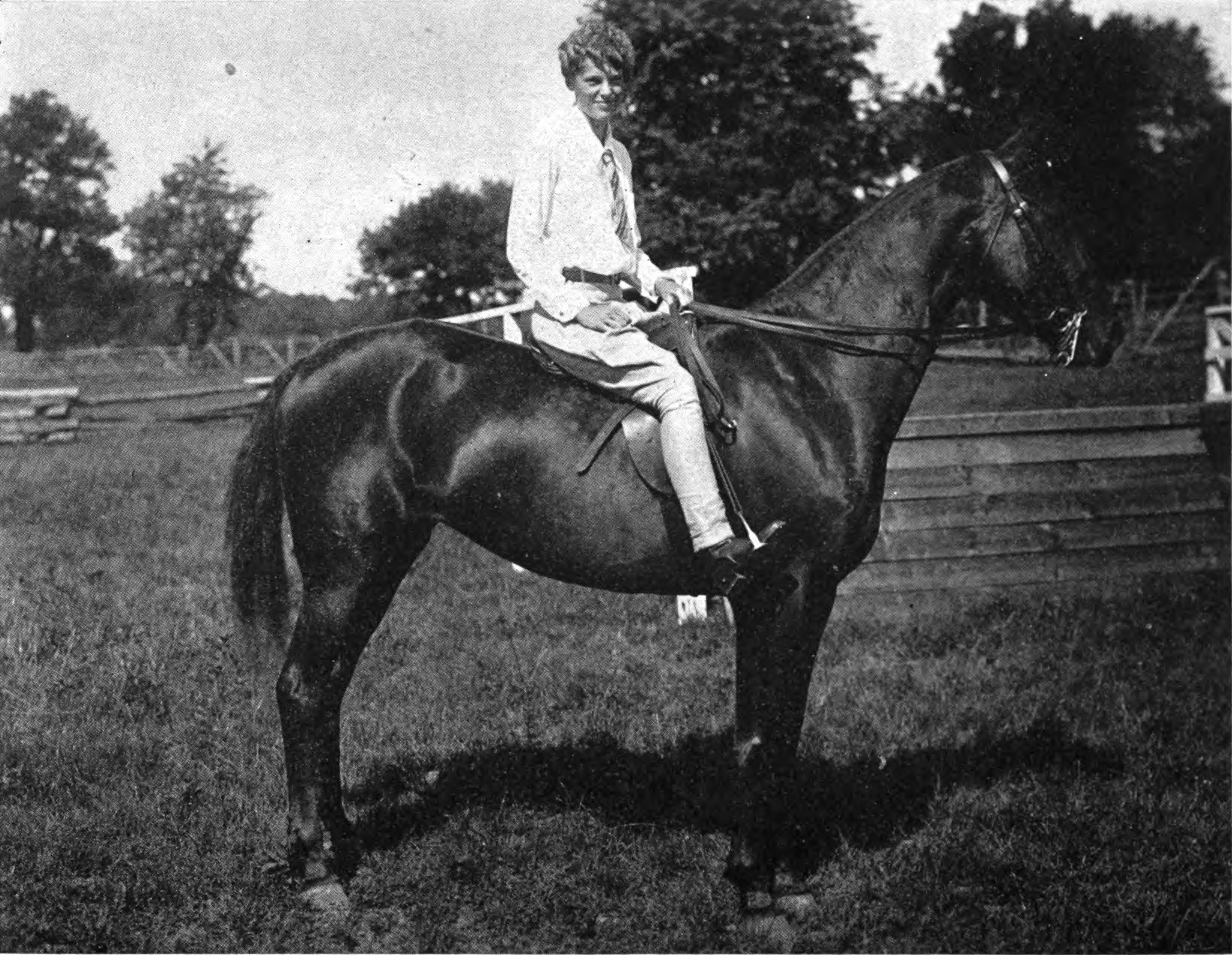
Earhart’s disappearance endures because it sits at the crossroads of courage, technology, and absence. Each new clue draws hope, yet the evidentiary standard stays high: an identifiable wreck, traceable components, and context that can survive scrutiny. Until then, each headline is a hypothesis with stronger math, not a solved chapter.
That is why the story keeps leaning on 1937-era evidence and familiar assumptions. The original signal trail is still the backbone, and modern tools circle it with precision. Progress is real, but so is restraint. In this case, intellectual honesty may be the most important instrument on board.