Classic newspaper comic strips trained readers to laugh in small, dependable doses, one panel at a time, alongside weather and headlines. The best strips did not chase noise. They built character voice, timing, and emotional truth inside tight spaces, then trusted the audience to fill the silence. Their influence still shows up in sitcom pacing, animated dialogue, and the quick logic of online jokes. Modern humor did not appear overnight. It was practiced daily, inked into routine, and remembered long after the paper was recycled.
Krazy Kat
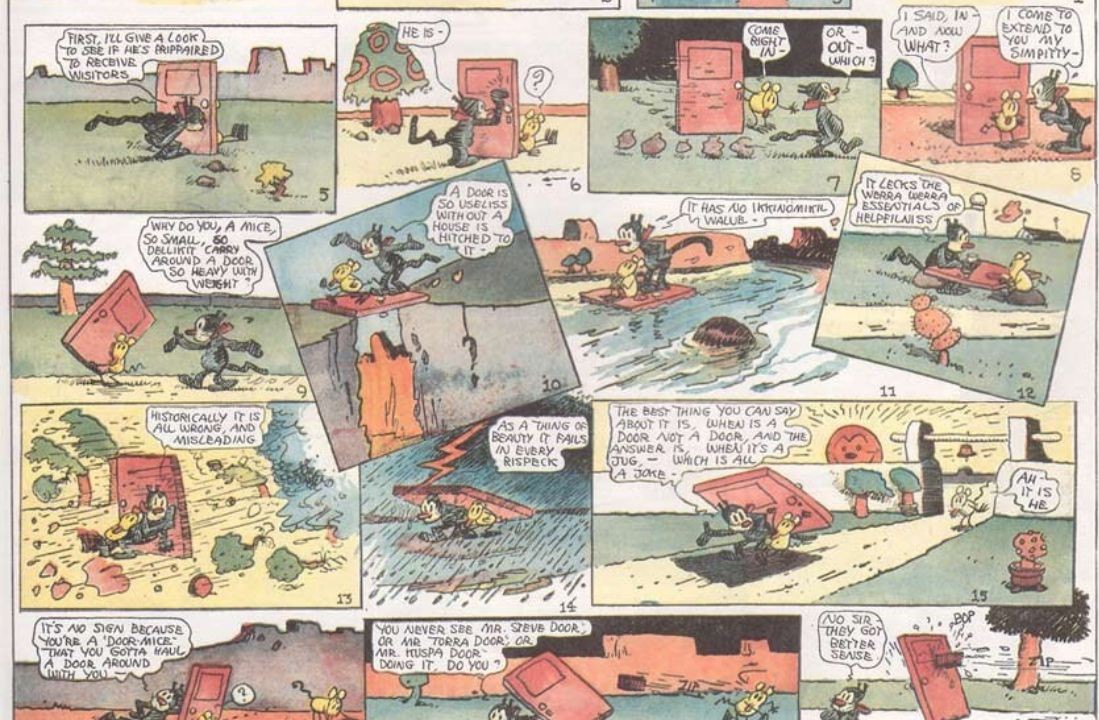
“Krazy Kat” treated reality like a playground and made repetition feel new. George Herriman’s desert loop of affection and mischief keeps returning, but the meaning tilts each time, so the laugh comes from the shift, not the setup. That confidence became a blueprint for modern absurdist comedy, where sincerity holds the scene steady while logic bends. Its slangy rhythm and visual looseness also proved a joke can feel musical, carrying mood through pacing and phrasing. The strip’s influence shows up whenever a comedian repeats a premise until it becomes strangely moving. It showed that the joke can live in tone, not just in plot.
Peanuts
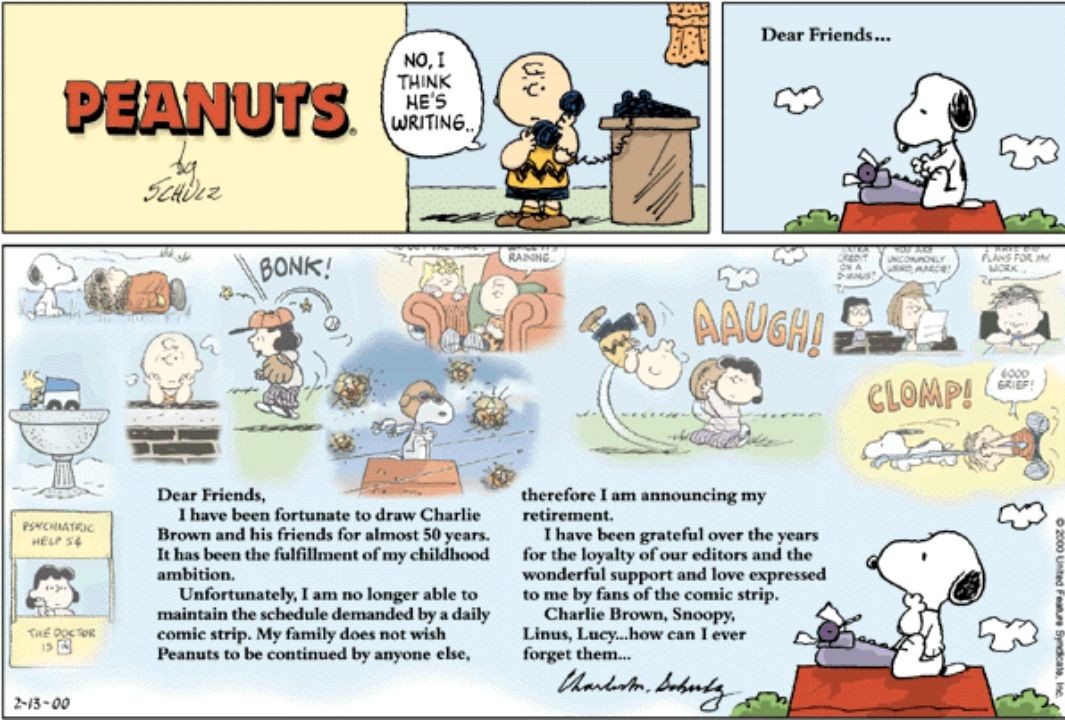
“Peanuts” showed how far a quiet pause can carry a joke. Charles M. Schulz built humor out of small letdowns, stubborn hope, and kids who speak with unnervingly clear logic, then let silence finish the sentence. Modern comedy borrows that mix of warmth and dry honesty, where the laugh lands because the feeling is true, not because the moment is loud. The strip’s clean staging trained readers to notice micro expressions and timing. It set the tone for gentle, self aware humor that can be sweet, funny, and a little bruised at the same time. That mix is a direct ancestor of modern comedy that smiles, then quietly tells the truth.
Pogo
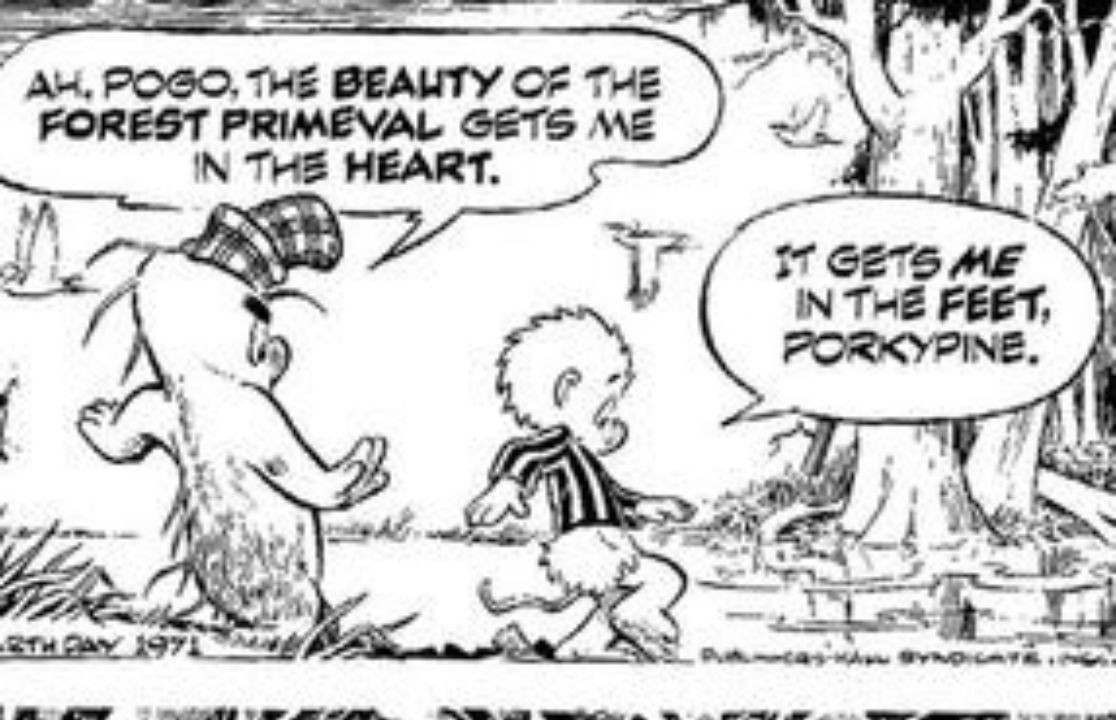
“Pogo” wrapped sharp satire in friendly swamp talk. Walt Kelly’s animals chatter in wordplay, malapropisms, and singsong phrasing that makes the language itself a running joke before the subtext even arrives. That two layer approach lives on in humor that keeps characters lovable while aiming commentary at politics, media, and public habits. It also proved smart comedy does not need to feel cold; it can stay playful, readable, and re readable, rewarding anyone who catches the second meaning hiding inside the first. Even the gentlest line can carry a wink. It is satire that invites readers in instead of pushing them away.
Doonesbury
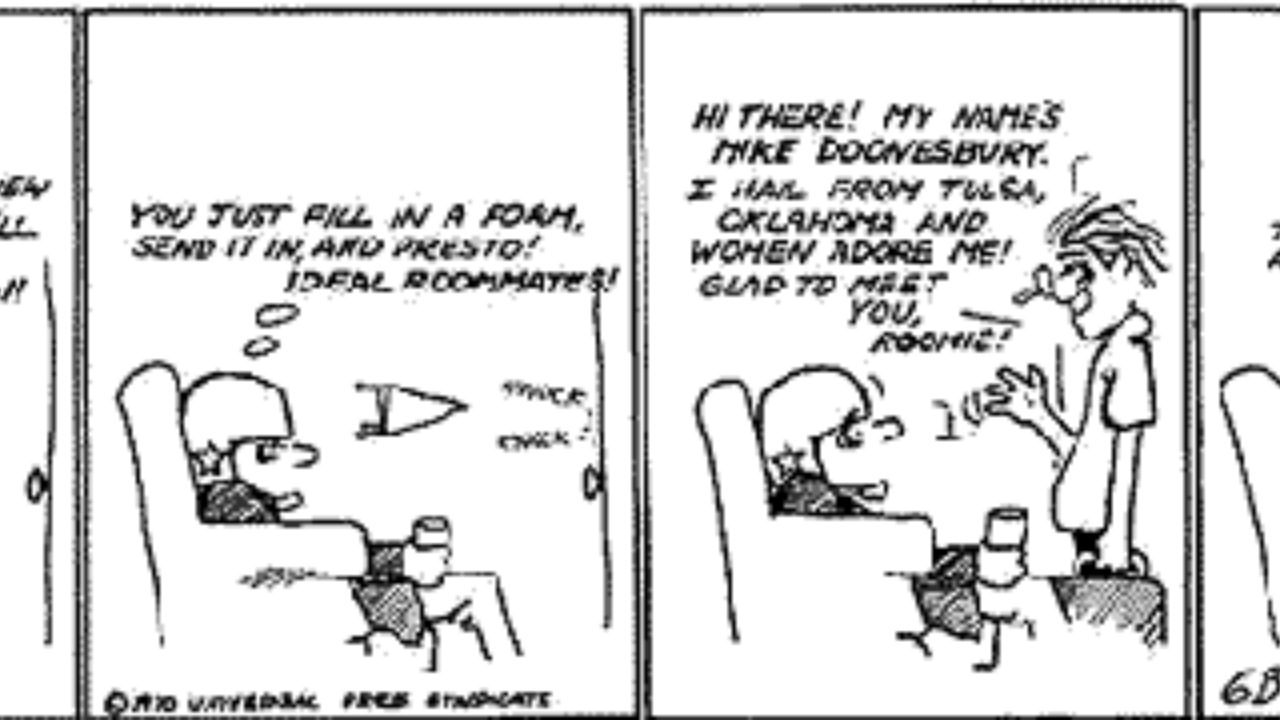
“Doonesbury” made newspaper comedy feel like a long story instead of a daily reset. Garry Trudeau let characters age, change jobs, and carry consequences, so the humor gains weight over weeks and years. That structure echoes in modern serialized satire, recurring bits, and character driven comedy where continuity is the point. It also normalized a calmer style of political humor, jokes delivered through awkward moments and human choices, not speeches. The result feels pointed without feeling preachy, and it still reads like a conversation that keeps moving through real time. Once that door opened, running comedic storytelling became normal.
Garfield
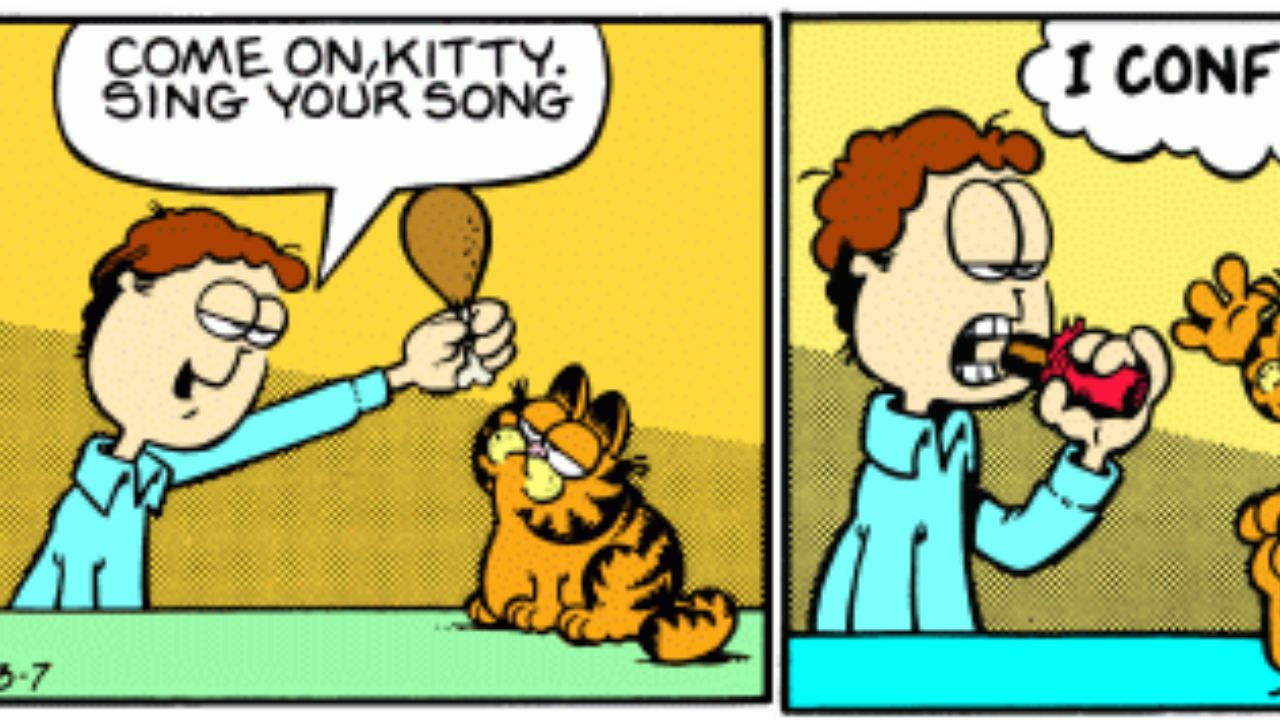
“Garfield” turned mood into a punch line that never needed explaining. Jim Davis built a voice of lazy confidence, sharp annoyance, and comfort first logic, then repeated it with clean timing until attitude became the gag. That template shows up everywhere now, from sitcom archetypes to meme formats that run on the same familiar beat: expectation, irritation, and a smug little payoff. The strip also made low stakes frustration funny without meanness, so the humor feels cozy, like a daily vent that ends with a shrug and a snack. It helped prove that relatability can be a style. A single raised eyebrow can be the whole punch line.
The Far Side
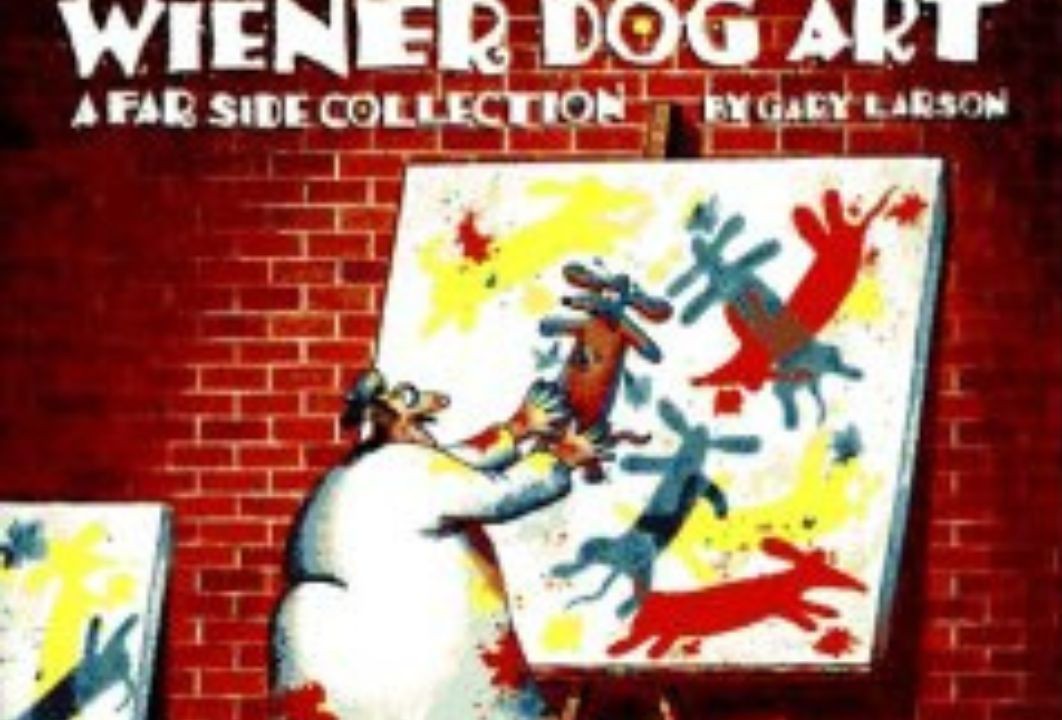
“The Far Side” taught readers to accept a strange premise instantly, then laugh at what it implies. Gary Larson’s single panels commit to a slightly off version of reality, where animals talk, science has social rules, and ordinary awkwardness becomes literal. Modern internet humor mirrors that method: minimal setup, one sharp idea, and a punch line that arrives as a new angle on something familiar. It also proved smart comedy can be fast and visual, trusting the audience to connect the dots. That trust is why the jokes still feel fresh decades later. One panel, one idea, and the world feels slightly different afterward.
Calvin And Hobbes
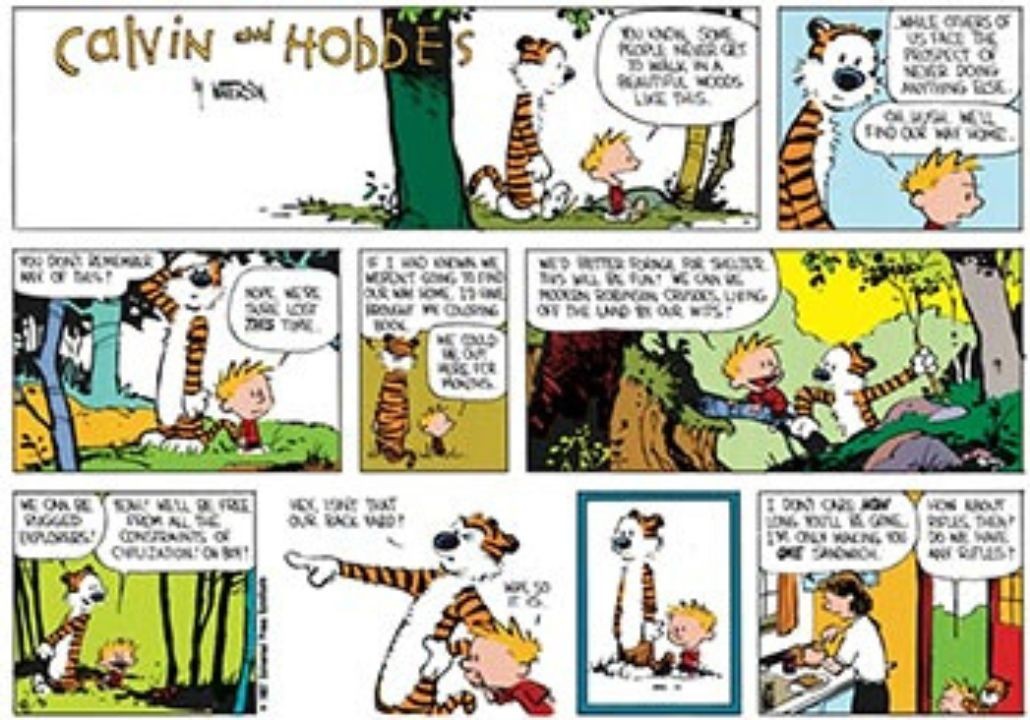
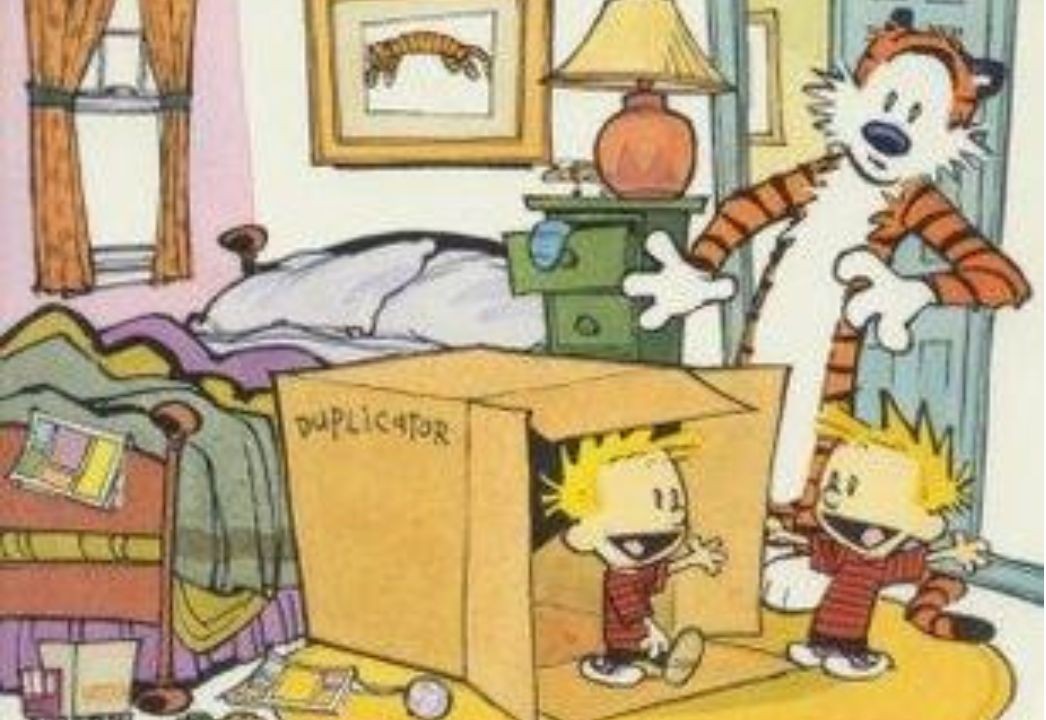
“Calvin and Hobbes” made imagination feel big, fast, and emotionally real while staying funny on every page. Bill Watterson jumped from backyard adventures to sharp observations about school, consumer habits, and adult logic, often in the same strip, and that range became its signature. Modern comedy that hides critique inside play owes a lot to that balance, where a wild scene can carry a serious thought without changing tone. Its cinematic pacing and expressive faces also influenced how animated shows stage action, then pivot into a quiet, thoughtful beat. The humor grows up without losing the kid energy.
Blondie
“Blondie” set the rhythm for domestic and workplace comedy long before sitcoms made it standard. Chic Young built humor out of routines, running gags, and small disruptions, where the structure stays steady and the joke comes from recognizable reactions. That dependable pattern still powers modern office humor and family comedies, which thrive on repetition and tiny surprises rather than big plot twists. The strip’s visual shorthand, quick looks, and tight timing showed how to land a joke in seconds, then let everyday life reset for tomorrow’s laugh. It is the ancestor of the reliable weekly bit.