World’s Fairs were built as temporary cities, where nations staged their best ideas in steel, glass, and spectacle. When the gates closed, much of the glamour vanished, but a handful of structures refused to disappear. Some were repurposed into museums, some became neighborhood landmarks, and others simply kept their place in the skyline, quietly collecting decades of weather and memory. These hidden gems hold the mood of their moments, then translate it into something useful: a lookout, a public plaza, a building that still gathers people under one roof.
The Atomium’s Walk-Through Geometry
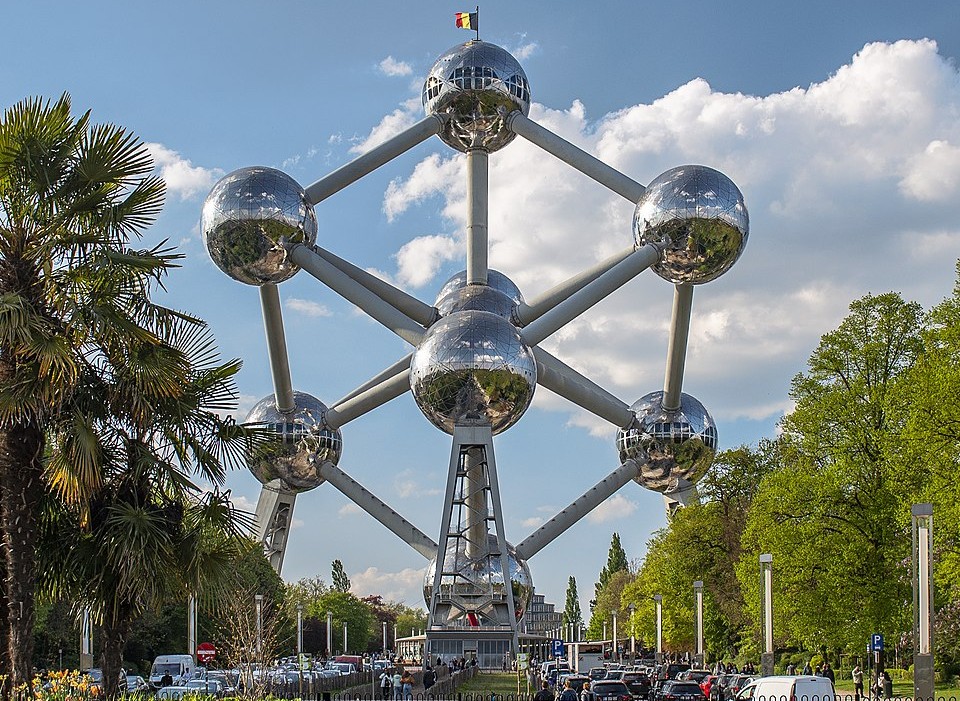
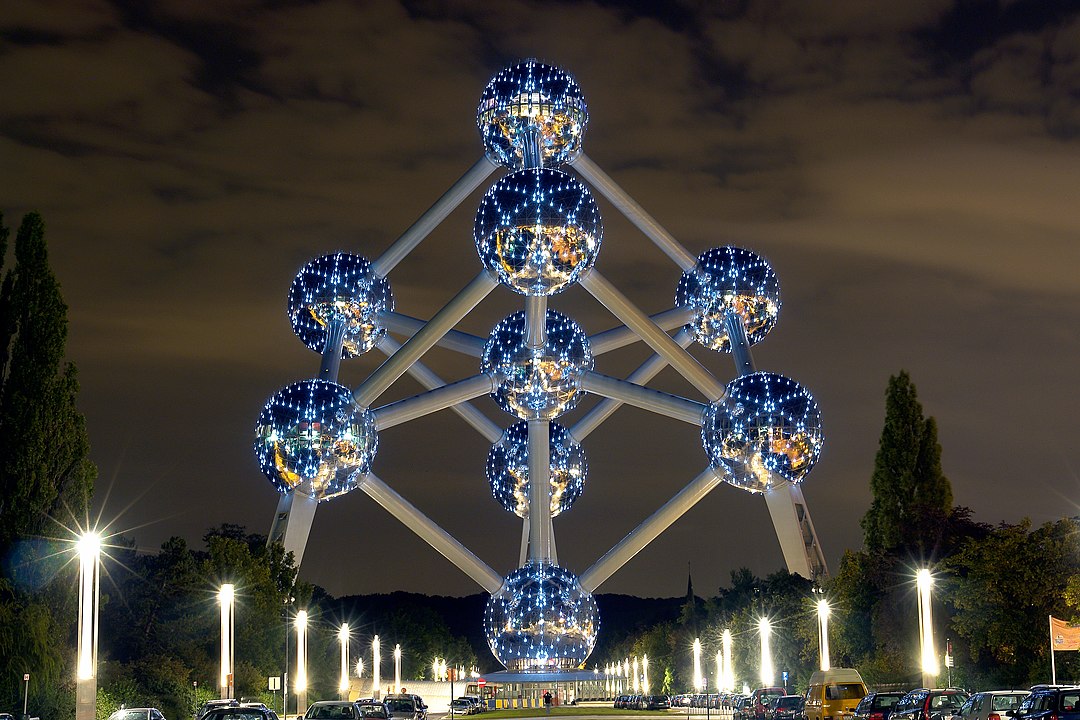
Built for Brussels’ 1958 World’s Fair, the Atomium turns midcentury curiosity into a walkable sculpture. Its nine spheres echo an iron crystal’s unit cell, enlarged until visitors can move through the connecting tubes like they are stepping inside a diagram. Engineer André Waterkeyn and architects André and Jean Polak expected a short run, but the landmark stayed, gained galleries, and a central elevator that lifts guests to a skyline view. After a major 2004–2006 refurbishment, the stainless skin still catches low winter light, and the place reads as confidence made physical, without the noise today.
The Space Needle’s Retro-Future Profile
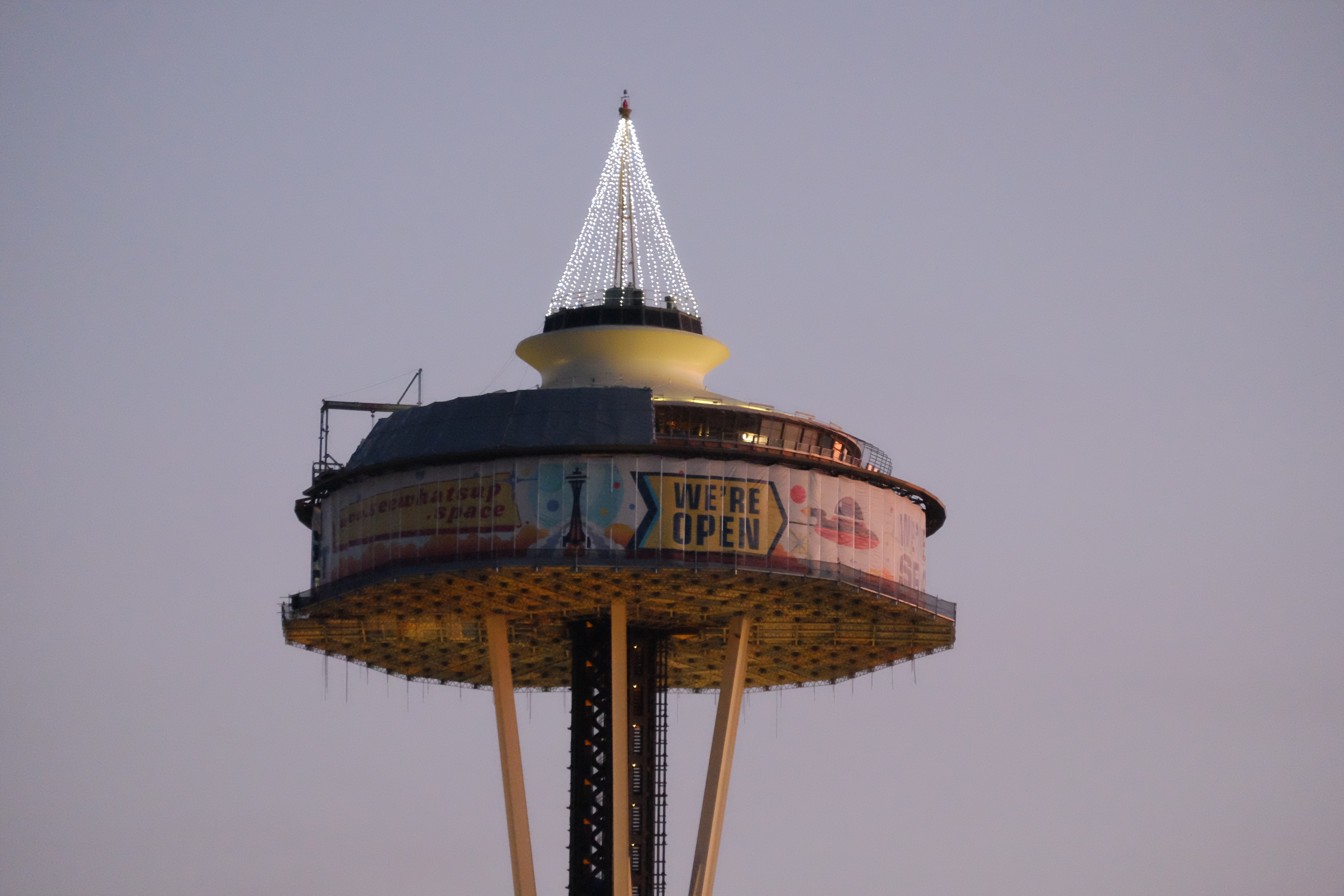
Seattle’s Space Needle arrived for the 1962 World’s Fair with a silhouette that still feels tailored to its skyline. Built as a statement about The Age of Space, it rose fast, then was finished in high-contrast colors selected to keep the form sharp against Northwest clouds, while the top held an observation deck and a revolving restaurant that made the view part of the show. Upgrades have modernized the experience, but from the Seattle Center plaza, the saucer still reads like a confident sketch made real, most striking when evening light turns the structure into a clean outline over the city’s grid.
Pacific Science Center’s Arches And Fountains
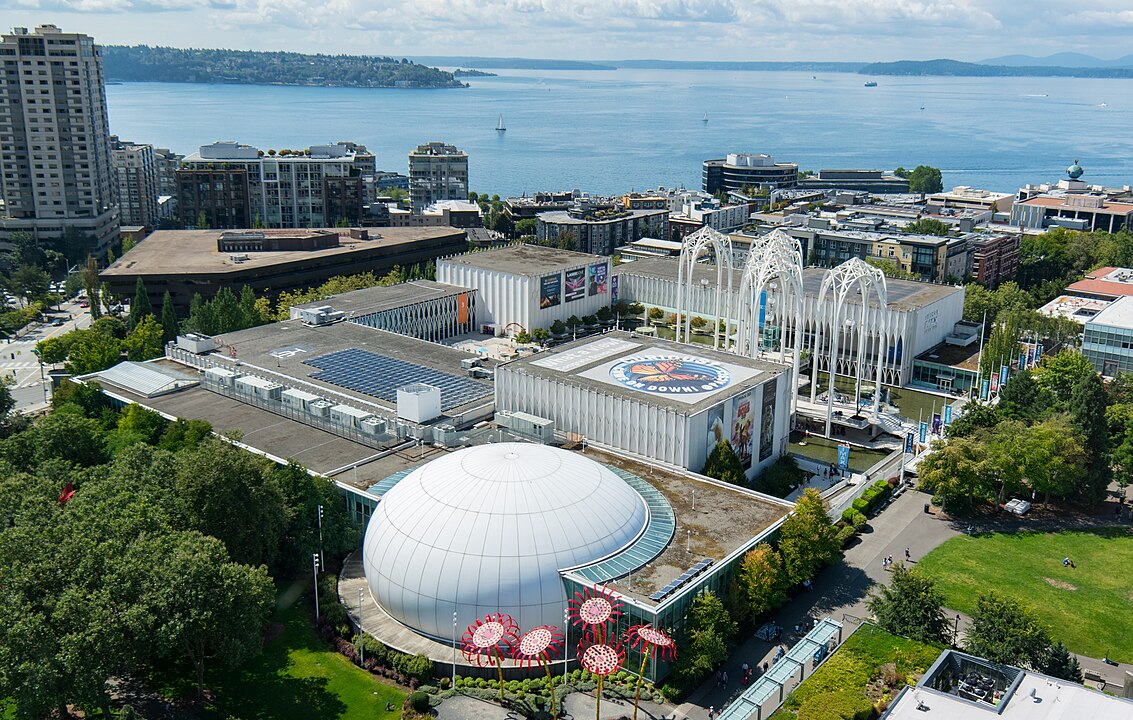
The Pacific Science Center keeps Seattle’s 1962 fair spirit alive in a quieter key, because it began as the United States Science Pavilion. Architect Minoru Yamasaki shaped it with airy arches, bridges, and reflecting pools, and the fountains still set the tone before anyone steps inside, turning a simple walk into a small procession. Reopened as a science center after the fair, it has hosted generations of school groups and weekend wanderers, proving that a place can teach without lecturing, on rainy afternoons as easily as in July, and still feel current, because the layout keeps pulling attention forward.
Montreal’s Biosphere, A Dome With A Second Life
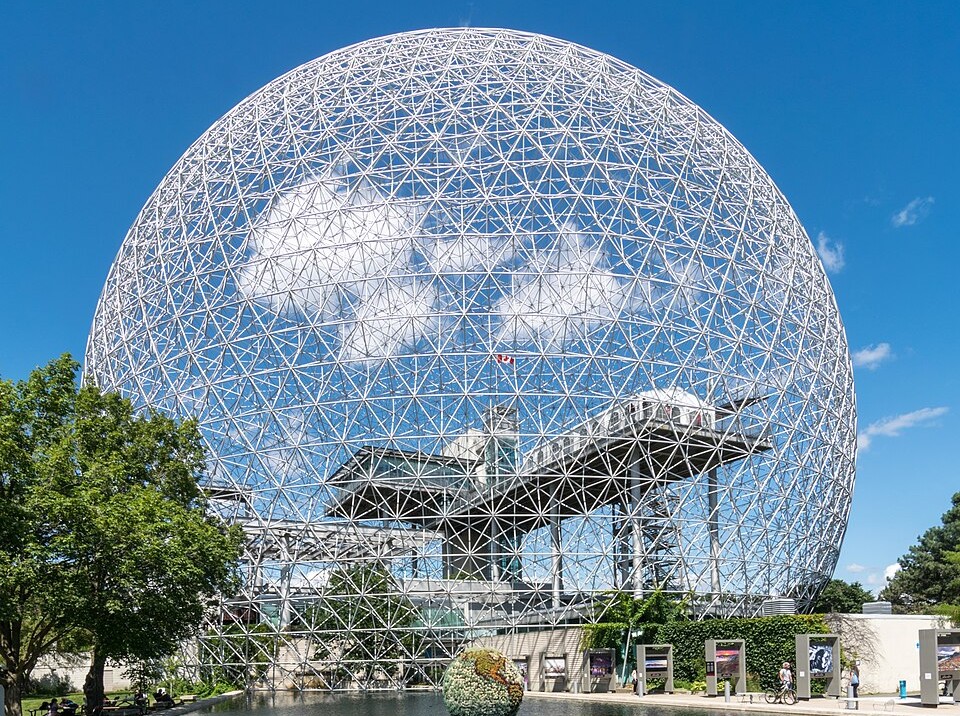
On Montréal’s former Expo 67 islands, the Biosphere stands like a lantern made of steel, the shell of the United States pavilion designed by Buckminster Fuller. Its geodesic lattice frames the Saint Lawrence River in every direction, and with the original transparent panels long removed, the dome reads as pure structure, crisp in winter and airy in summer. Now an environmental museum, it trades spectacle for focus, using a fairground landmark to explore water and climate, and at sunset the geometry turns the shoreline into a calm, modern promenade that invites lingering after the daytime crowds thin out.
Habitat 67’s Stacked Neighborhood In The Sky
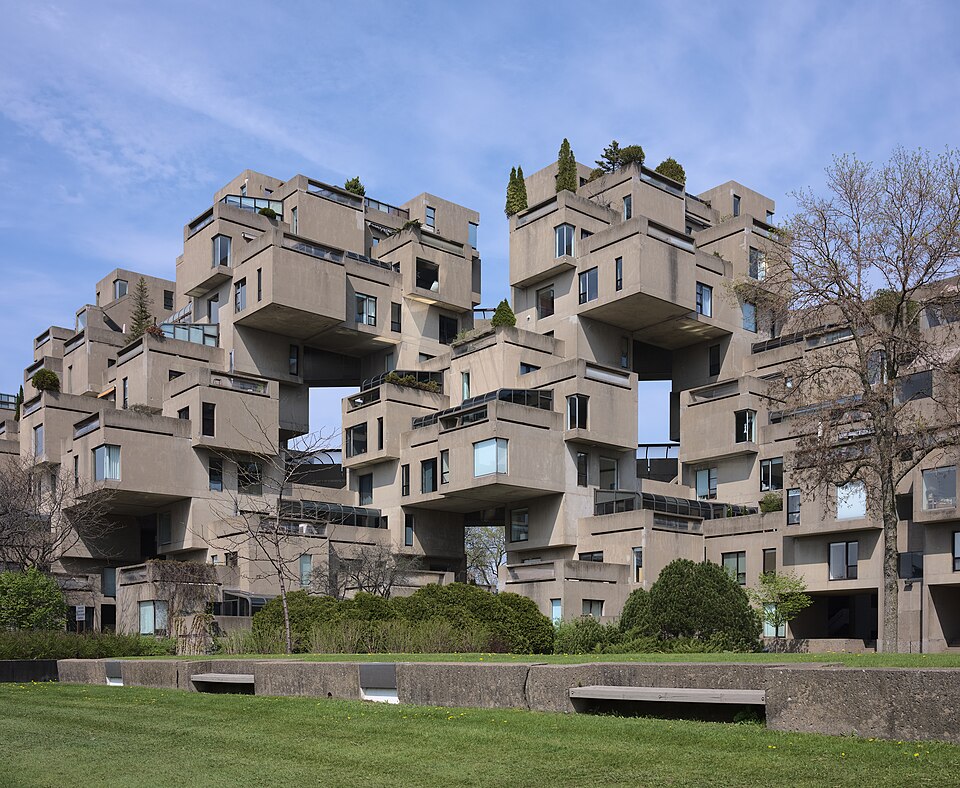
Habitat 67 began as Expo 67’s housing experiment, with architect Moshe Safdie stacking prefabricated concrete modules to make density feel like a neighborhood of private terraces. From the Saint Lawrence River it looks like blocks paused mid-motion, but the system is disciplined, giving many homes sunlight, cross-breezes, and outdoor space while preserving privacy. Because residents still live there, it never turns into a static monument; plants, patio chairs, and everyday routines keep the idea honest, and that lived-in proof is exactly why the complex still matters in Montréal’s Cité du Havre, long after the pavilions vanished.
The Unisphere’s Frozen Orbits
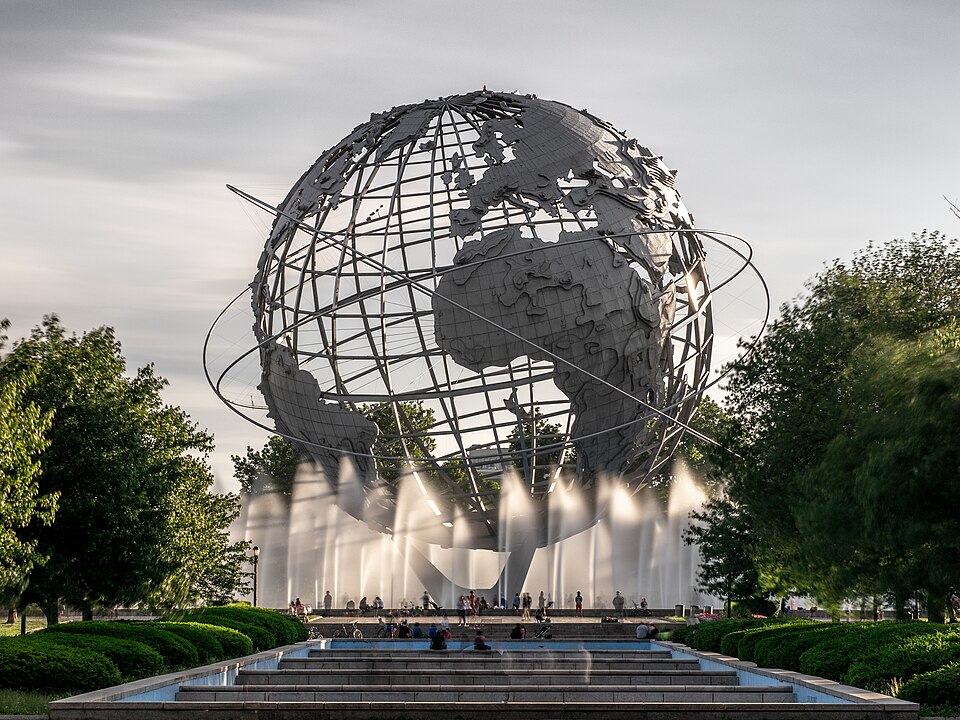
The Unisphere anchors Flushing Meadows–Corona Park as the stainless globe built for the 1964–1965 New York World’s Fair, rising about 140 ft and visible from the park’s long, straight paths. Raised continents sit on an open grid of meridians and parallels, while three orbit rings slice around the sphere, turning the plaza into a clear symbol of shared routes and shared horizons, even for commuters passing by. With fountains murmuring at its base, it doubles as a practical rendezvous point for park days and festival nights, and the metal catches sunset in a way that makes the whole scene feel briefly ceremonial.
The New York State Pavilion’s Map Underfoot
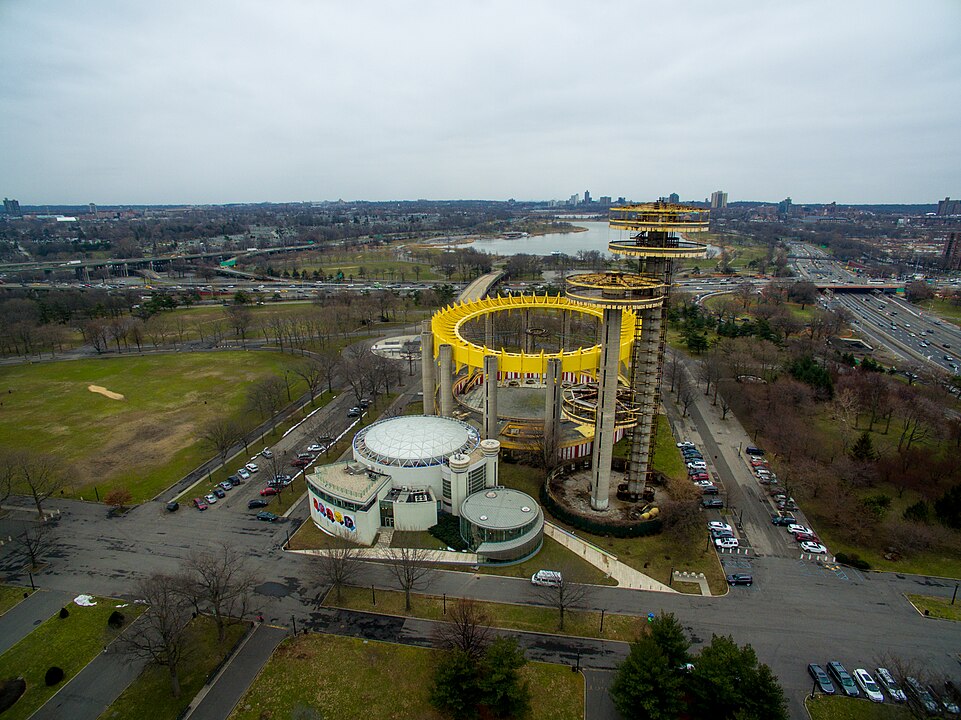
The New York State Pavilion, designed by Philip Johnson for the 1964–1965 fair, still sits in Flushing Meadows like a futuristic stage set that never quite got struck. Its most surprising detail is the giant terrazzo road map of New York State, a floor mosaic assembled from hundreds of panels that once let visitors stand on tiny town names while looking up at the open ring of columns. After years of neglect, stabilization and restoration efforts have brought back real momentum, and the site’s scale makes a simple visit feel like walking into an idea that is finally being taken seriously again.
The Palace Of Fine Arts’ Lagoon And Light
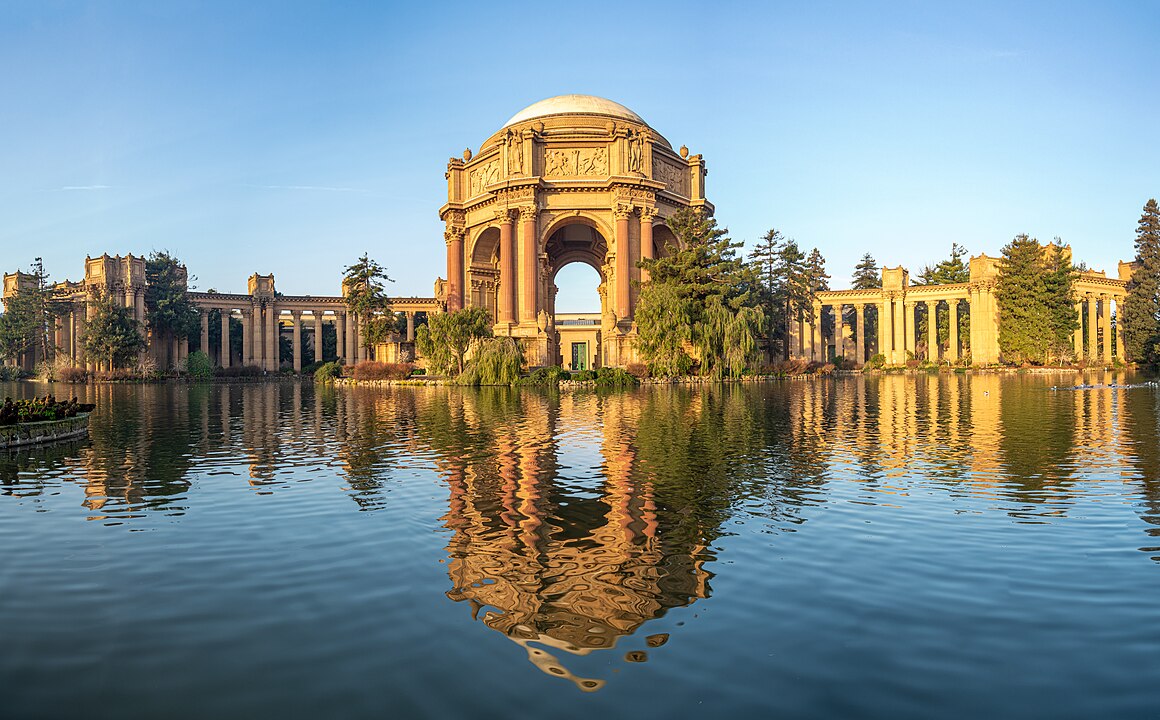
San Francisco’s Palace of Fine Arts began as a temporary showpiece for the 1915 Panama-Pacific International Exposition, yet it became the city’s most enduring daydream. Architect Bernard Maybeck designed the rotunda and colonnades to look gently weathered beside a lagoon, borrowing the mood of classical fragments without the heaviness of a monument. Rebuilt in sturdier materials in the 1960s and early 1970s, it now anchors the Marina with swans on the water, the dome doubled in reflections, and a steady rhythm of musicians, picnickers, and locals who fold the scene into an ordinary walk home.
Grand Palais’ Glass-Roofed Grandeur
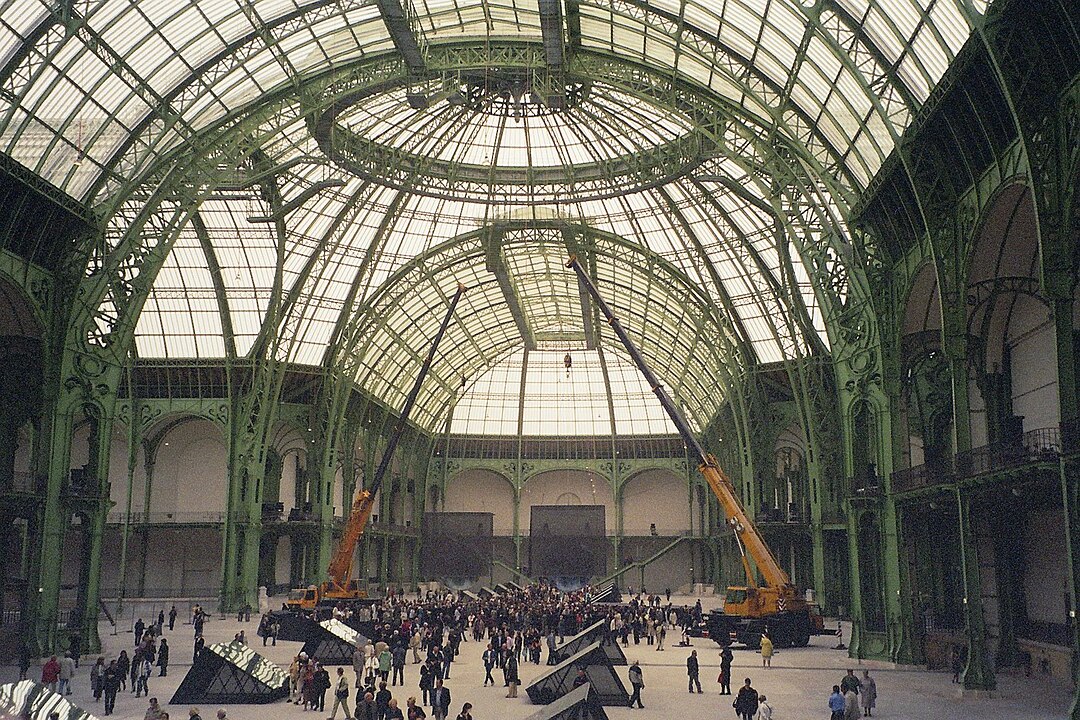
Paris built the Grand Palais for the 1900 Exposition Universelle, opening it near the Champs-Élysées as a statement in stone, iron, and glass. The facade provides the formal frame, but the real drama lives in the vast glass-and-steel roof, where daylight turns ironwork into lace, rain taps overhead, and voices soften into a museum-like hush. Because the Nave has hosted art, fashion, and design across decades, it reads less like a relic and more like a working room for the city, with queues, ticket stubs, and small rituals that keep the scale human even when the ceiling feels endless on a Saturday morning.
Osaka’s Tower Of The Sun, Still Unruly
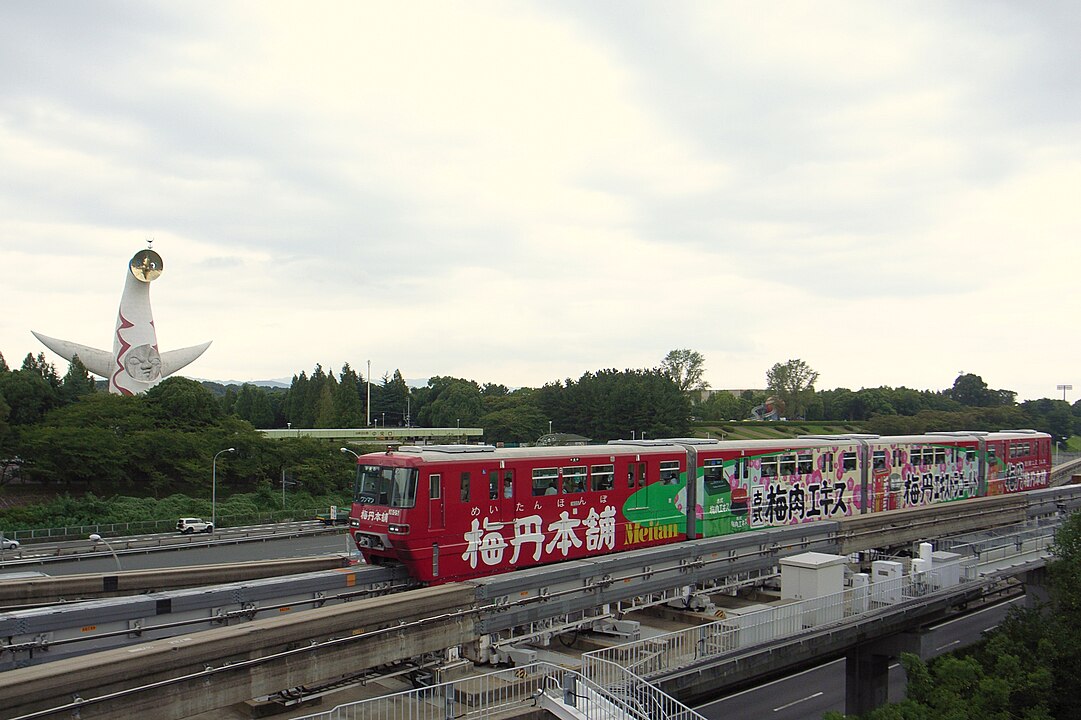
Expo ’70 in Osaka promised harmony and progress, but Tarō Okamoto’s Tower of the Sun answered with something stranger and more personal. The sculptural monument once pierced the Festival Plaza roof, wearing bold faces and holding the “Tree of Life” inside, a towering artwork that traced evolution upward with a museum’s detail and an artist’s impatience. Preserved in Expo ’70 Commemorative Park, the tower still pulls visitors off the main paths, proving that the most memorable fair souvenirs are not always the polite ones; they are the pieces that keep asking questions long after the banners come down.
San Antonio’s Tower Of The Americas
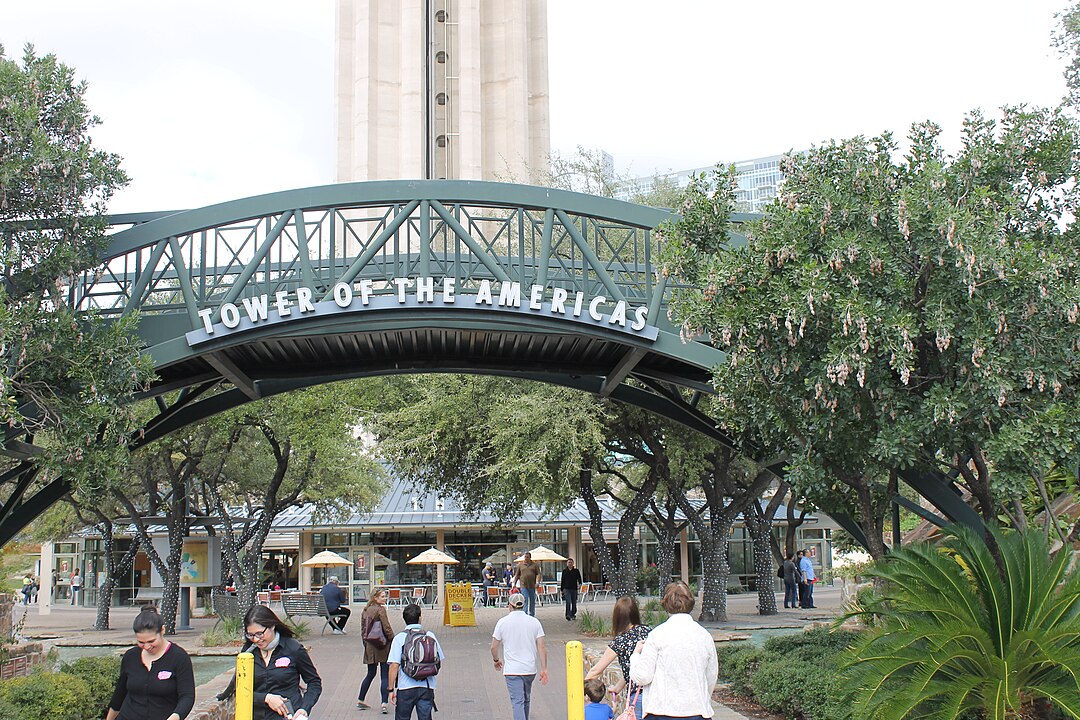
San Antonio’s Tower of the Americas rose for HemisFair ’68 as a single, clean gesture meant to announce the city from miles away. At 750 ft, the shaft and top pod turned skyline viewing into an event, pairing a lookout with dining so the horizon felt like part of the program, not just background scenery. Because the tower stands in the Hemisfair district near downtown, it still works as an orientation point for walks between the River Walk, historic neighborhoods, and new parks, and at night the lights sharpen the silhouette until the whole skyline looks neatly edited, especially on clear mornings when the Hill Country haze sits low.
Melbourne’s Royal Exhibition Building Endures
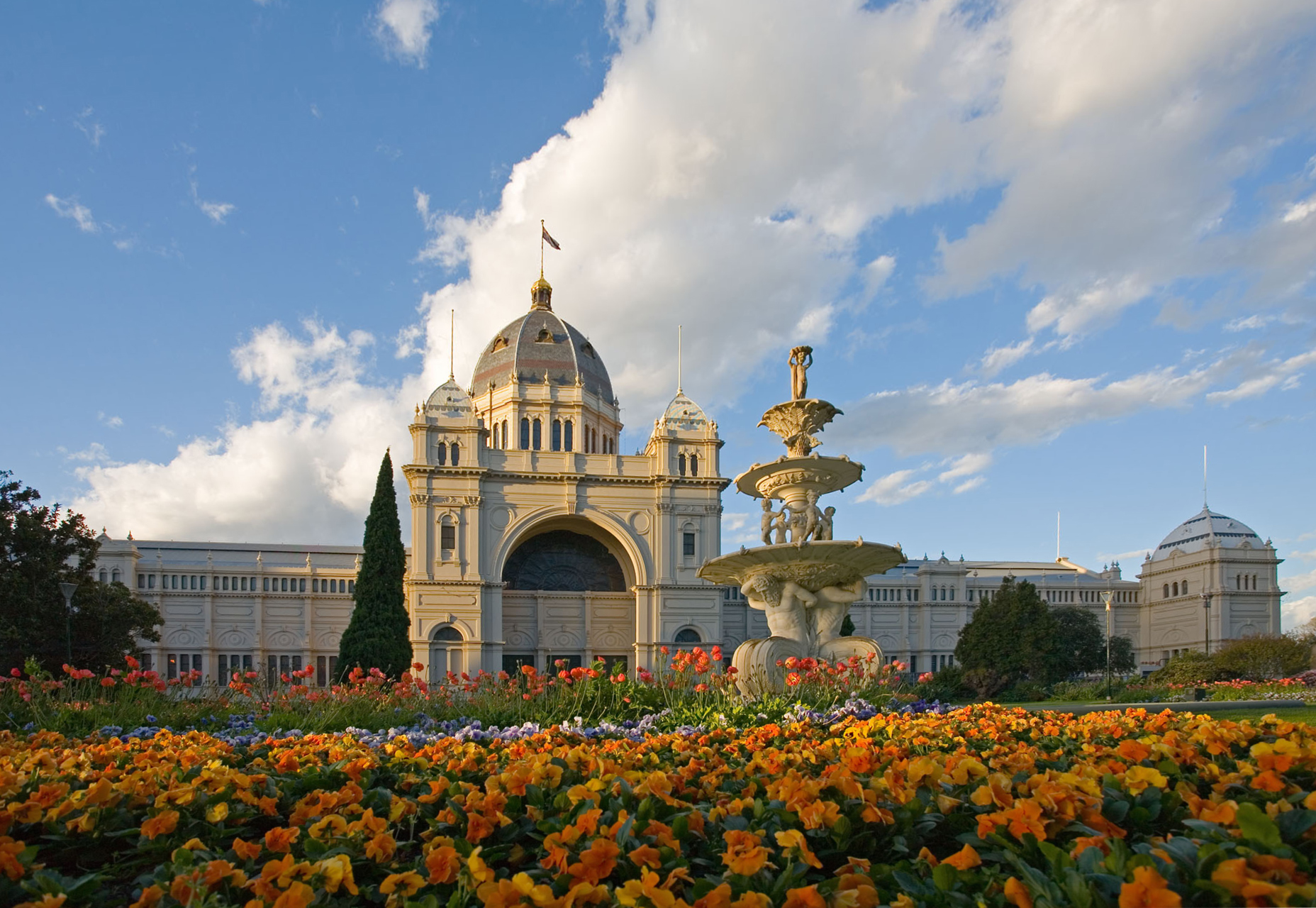
Melbourne’s Royal Exhibition Building is a rare survivor of the grand international exhibitions era, built for the Melbourne International Exhibition in 1880 and reused again in 1888. Set in Carlton Gardens, Joseph Reed’s design mixes brickwork, iron structure, and a commanding dome, giving the site the feel of a civic palace rather than a temporary fair hall. Now protected as a UNESCO World Heritage property, it still hosts events, which matters: the building stays alive when people keep filing through the doors, hearing their footsteps echo under the dome, and treating history as part of the city’s present tense.