
Some phrases sound like metaphor, yet many began as plain labels for tools, rules, and work. Language kept the picture after the original scene faded, so everyday talk still carries old rooms, docks, courtrooms, and print shops.
That is why these sayings feel sharp. Each one started as something visible: a line on the ground, a ribbon on paperwork, a lamp on a stage, a rope running out. The meanings drifted, but the images stayed literal enough to read in a blink, which is why they survived.
The twelve examples below keep that original scene close. They also explain why a throwaway phrase can still feel oddly exact today.
Deadline

The first “deadline” was not a calendar reminder. In some Civil War prisons, a dead line was a marked boundary inside the stockade that prisoners were forbidden to cross, treated as a literal do-not-pass rule under guard watch. The term carried the blunt idea of a boundary that ends debate.
Newsrooms later borrowed that hard-edge image. By the early 1900s, editors used “deadline” for the last moment copy could reach the press before typesetting and printing moved on. Past that cutoff, the paper rolled without the missing words, no matter how good they were. A line in dirt became a line in time, and the pressure stayed anyway.
Caught Red-Handed
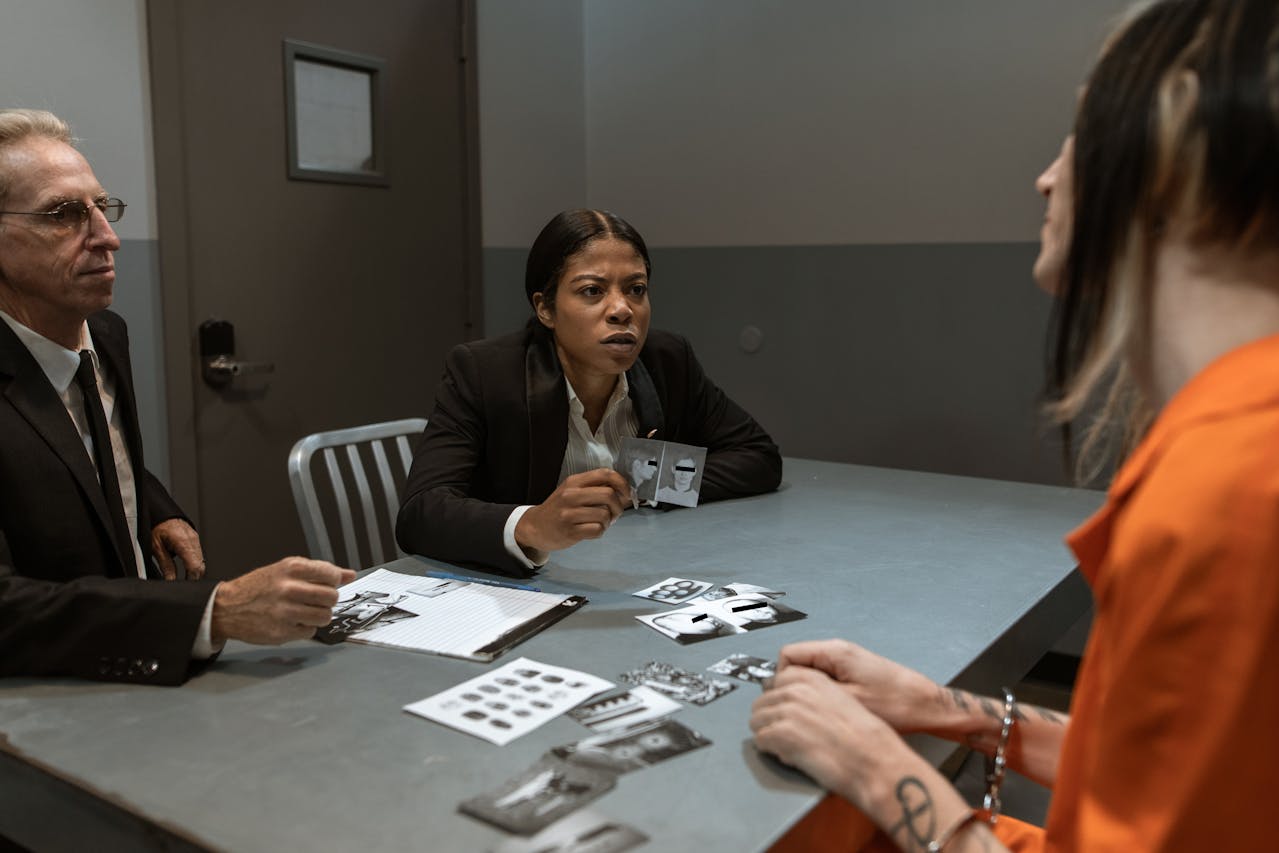
“Red-handed” began as a literal problem of proof. Scottish legal writing used red hand for someone caught in the act, with the image pointing to fresh blood on the hands, often tied to poaching or theft where timing mattered and witnesses were scarce. The point was simple: the mark was still there.
The phrase survived because the picture does the arguing. It suggests wrongdoing so recent it still shows, leaving little room for denial or tidy explanations. Over time it widened beyond violent crimes, but it kept that same stain-of-the-moment feel. Even now, “caught red-handed” implies the act was discovered before the story could be rewritten.
Turn A Blind Eye

“Turn a blind eye” has always been about choice, not eyesight. The Oxford English Dictionary records the phrase in 1698 as a way to describe deliberate ignoring, a refusal to engage with a fact that would otherwise demand action. It often traveled with “turn a deaf ear,” reinforcing the idea of chosen silence.
The famous scene attached to it came later. During the 1801 Battle of Copenhagen, Horatio Nelson is said to have raised his telescope to his blind eye and claimed he could not see a signal to stop. Whether embellished or not, the anecdote explains the phrase’s bite: sight is possible, and the refusal is intentional, not accidental.
Beyond The Pale

A pale was once a fence made from stakes, so “beyond the pale” began with a literal boundary. A pale marked where authority, safety, and familiar customs were meant to hold. Step beyond it, and a person was outside the guarded space, where the rules felt thinner.
Later, many tied the phrase to “the Pale” in Ireland, the English-controlled district around Dublin. The OED’s earliest figurative example dates to 1720, so the Irish link may be more folk story than proof, but the meaning did not need the geography to work. The picture stays: someone has crossed a boundary, and their conduct now sits outside what the group considers acceptable.
Break The Ice

“Break the ice” first meant opening a route, not easing awkward silence. On frozen waterways, travel and trade could stall until someone literally split the surface so a boat could move. The first crack mattered because it changed everything that followed.
The metaphor arrived early too. Erasmus recorded the Latin scindere glaciem, explaining it as opening the way and being first to tackle a hard task, like sending a crewman ahead to smash a channel through ice. Conversation later borrowed the same mechanics. One person speaks first, tension loosens, and the group can move forward without pretending it was never stiff at all.
Red Tape

Red tape began as actual red ribbon used to bind official papers into bundles. The color made important dossiers easy to spot and harder to tamper with, turning loose pages into something formal, tracked, and tied shut. It was office supply with status, a visible sign that a file belonged to authority.
Over time, the ribbon became shorthand for the slow machinery around it. By the 1800s, writers were already using “red tape” to complain about procedures that multiply steps and stall decisions. The phrase still works because it stays physical: progress feels knotted up in paperwork, waiting for the right stamp or signature to loosen the tie.
Blackballed

To be blackballed once meant being rejected by a literal black ball. Many clubs used secret ballots with white balls for approval and a black ball for opposition, dropped into an urn so votes stayed private. In some places, one black ball could block admission.
The system made the outcome final without forcing a public argument. The urn opened, the dark ball appeared, and the door stayed shut. It protected the group’s comfort, not the applicant’s feelings. That is why the verb still feels cold. It describes exclusion that happens quietly, with no explanation offered, only the sense that someone chose “no,” and the room moved on.
Pull Out All The Stops

On a pipe organ, stops control which ranks of pipes receive air. Pulling a stop knob brings a set of pipes into play, changing the instrument’s color and volume; pushing it back in silences that rank again. The console is a panel of choices, each one audible.
So “pull out all the stops” was once a literal move for maximum sound. It meant engaging every available rank until the hall filled with the fullest mix the organ could produce. The phrase still fits effort because it describes a clear decision: nothing held back, every resource used, and the moment built to land with impact rather than restraint. No half measures ever.
By And Large

“By and large” began as sailors’ language, not office language. To sail by meant sailing close to the wind, while sailing large meant running with the wind freer and more behind. A ship that did well by and large handled both angles, making progress whether the breeze fought the bow or helped from behind.
That practical praise slid into everyday English as in general or on the whole. It still carries the sea logic: a judgment made across changing conditions, not from one perfect moment. The phrase does not promise perfection. It suggests that, taken across the trip, things held together, with exceptions noted but not exaggerated.
To The Bitter End

The “bitter end” is nautical before it is emotional. It refers to the last part of an anchor cable that remains secured on board near the bitts, the sturdy posts used to make the line fast. Sailors needed to know when the end was coming, because paying out the cable to its limit changes what a ship can do.
That physical limit became a moral one. By the 1800s, the phrase was used for sticking with a task until the last inch runs out, with no slack left to ease the pull. It is not about taste. It is about strain and commitment, the moment when effort cannot be extended further, only endured with steady hands under pressure.
In The Limelight

Limelight was once a real stage technology, not a figure of speech. In the 1800s, theaters used an intense white light made by directing an oxyhydrogen flame at quicklime, so heated calcium oxide glowed bright enough to act like an early spotlight. It was also called Drummond light after early practical use.
Performers who stood in that beam were literally singled out. The light made faces and gestures easy to read from the cheap seats, and it also made mistakes harder to hide. That is why “in the limelight” still means public attention with a double edge. The glow flatters from far away, but up close it exposes everything.
Show Of Hands

A “show of hands” is literal by design. In meetings and assemblies, people raise a hand to signal support or opposition when secrecy is unnecessary, letting a chair read the room quickly and move on. The phrase is recorded as an idiom by the late 1700s, tied to open, informal voting.
Its power is the visibility. A show of hands does not just count votes, it displays them, including hesitation and abstention. That public element can build momentum, but it can also pressure quieter people into going along. Even outside politics, the phrase keeps the same meaning: a decision lifted into view, counted at a glance, then carried forward.