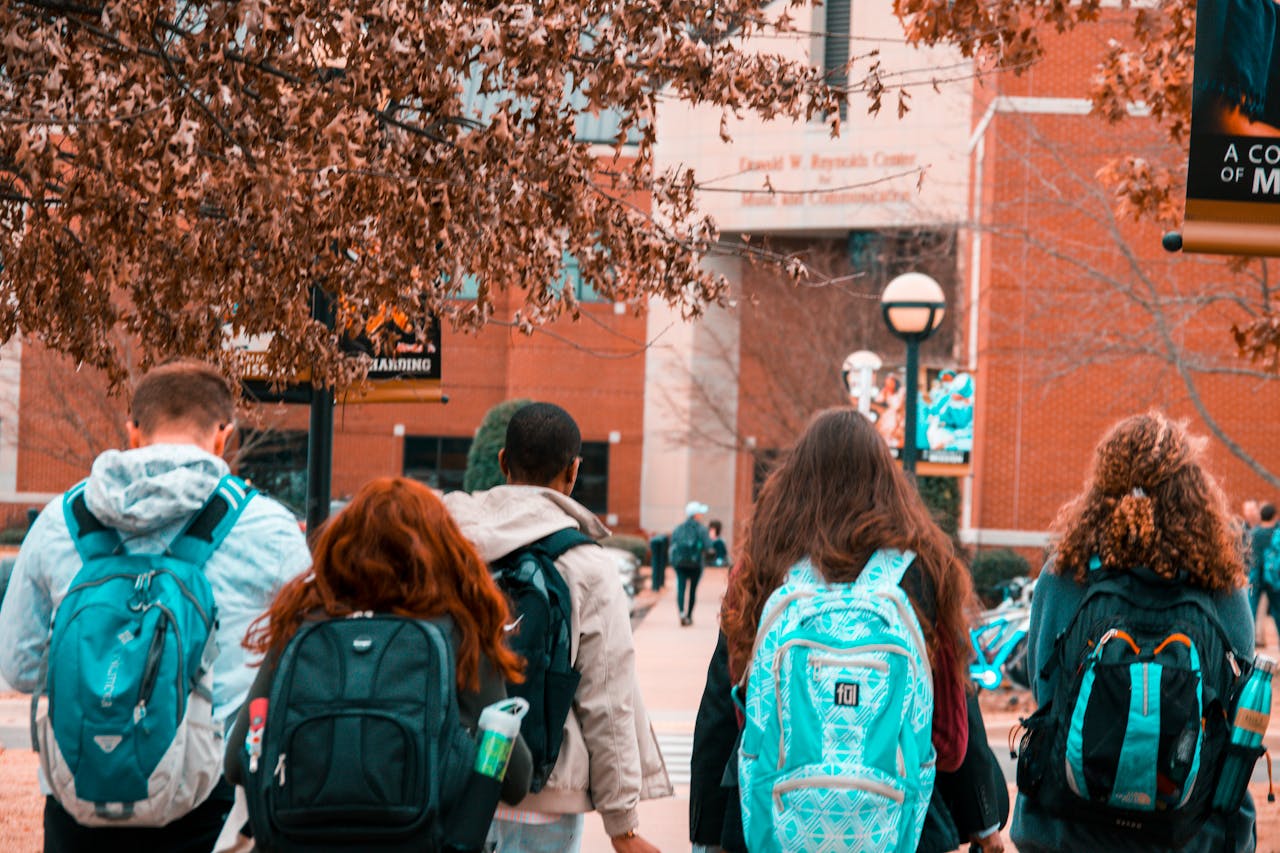
Ghost students are not students at all. In ABC’s investigation, Murat Mayer, a researcher with a Ph.D., learned that someone had enrolled him and his teenage son at community colleges while filing for aid in their names. He suspected the theft followed a health insurer data breach during the pandemic. The accounts used fake emails and phone numbers, so warnings never reached the family until the paperwork caught up. Fraud teams say the goal is simple: trigger Pell grants and loans, show brief participation, then disappear. The fallout is real: credit scores can drop, and clearing the record can take months of proof.
Identity Theft Becomes an Enrollment File
The ghost student scam begins with identity theft, then turns a stolen name into an enrollment file that looks routine in an online portal. In ABC’s reporting, Murat Mayer and his teenage son were signed up at community colleges they never contacted, and his son was even listed as a second-year student at a Utah campus.
Fraudsters pair the victim’s details with a fresh email and phone number, so notices flow to them, then they use AI to enroll long lists of people in minutes, trigger Pell grants and loans, show brief participation, and vanish after funds are paid, often before a human ever verifies the student fully live.
Community Colleges Get Hit at Scale

Community colleges are attractive to this kind of fraud because the intake process is built for speed and access, not suspicion, and many steps can be completed with uploaded images and typed data. ABC’s station in Philadelphia reported that two schools found nearly 500 ghost students registered in classes, a volume that can overwhelm staff who are trying to serve real applicants.
Once an account is created, the pattern repeats: sign up for classes, apply for Pell grants and loans, show a hint of participation, then disappear, leaving behind a messy roster and a victim who never saw a single alert until a credit report changes.
The Same Applicant Tries Again With New Paperwork

One of the clearest red flags is repetition, especially when the same applicant keeps returning with new paperwork. A college in Maryland shared a photo of a would-be student applying to its school; ABC blurred the face because the person had not been charged with a crime. ABC then reported that the same individual tried again just last week, using a different name and ID.
When identity review is rushed or scattered across offices, staff may only see each submission as a single file, not a linked trail, and that disconnect lets a fraudster keep probing for the easiest door during the busiest weeks of the semester, often unseen.
Foreign Digital Footprints Clash With Local Claims

Investigators and security teams say location data can reveal the story an application is trying to hide, especially when most of the process happens without a face-to-face moment. Experts interviewed by ABC described seeing digital footprints tied to Bangladesh, Nigeria, and Russia, even when the applicant claims a local U.S. address and a familiar name.
The mismatch is not proof on its own, but it becomes persuasive when paired with patterns like midnight submissions, repeated password resets, or device logins that hop across countries while the supposed student never answers a verification call or appears in any real classroom.
A 31% Fraud Rate Shows How Convincing Files Can Look
In suburban Atlanta, former NFL linebacker Maurice Simpkins and his wife run a software security company that helps more than 150 schools verify that incoming students are real people, ABC reported. Asked about the worst case he had seen, Simpkins said one run-through showed about 31% of the data presented was fraudulent, a number that startled even seasoned staff.
Those checks focus on identity signals that humans miss under pressure: inconsistent documents, reused images, mismatched addresses, and phone numbers that never connect, catching the fake profile early, before enrollment records and aid files harden into a mess.
Fake Emails and Numbers Keep Victims in the Dark

A quiet detail explains why victims often learn about the fraud late: the account is designed to talk to the thief, not the person whose name is being used. Mayer told ABC that when his family applied for college financial aid, someone had already beaten them to it, and he got no notice because the application listed a fake email address and a fake phone number.
That setup funnels every alert, reminder, and aid update to the fraudster until it is time to pay up, and by then the real person is left untangling an academic trail they never created and a school record that can look legitimate, sometimes in a state they never visited.
The Credit Score Drop Becomes the First Real Alarm

For many victims, the first clear sign is financial, not academic, because credit bureaus react faster than college offices. One person told ABC that in Feb. they woke up to a credit score drop of about 200 points and panicked, assuming they had made a mistake, before tracing it to a loan and a federal grant taken out in their name during the pandemic.
It was thousands of dollars, and the shock came with a second insult: the fraudster had built the school account with fake contact details, so notices never arrived until the damage was already on the record and the cleanup clock had started. On paper, it read like enrollment.
Clearing a Name Can Take 11 Months

Cleaning up the aftermath is slow because systems are built to verify paperwork, not to unwind a fraud that was filed neatly and digitally. In ABC’s reporting, a victim said they needed two decades of documentation to show the aid and enrollment were not theirs, including tracking down a high school transcript from more than 20 years ago and gathering records piece by piece.
The process took 11 months, with time spent calling schools, lenders, and credit agencies, and the emotional weight was plain: it felt harder to prove innocence than it was for the scammer to create the account, click submit, and walk away without a trace.