Kids’ games can look like pure silliness, yet many began as something more purposeful: a moral lesson, a fitness test, or a way to settle disputes without real stakes. Written records show familiar rules traveling across continents, then shrinking down to fit a sidewalk or a classroom corner, in plain sight.
Names and chants moved the same way, carried in older languages and schoolyard slang until the original meaning blurred. What stays is the spark, suspense, small risks, and laughter because everyone shares the script. Tracing the origins does not ruin the play; it makes the play feel older, sturdier, and reassuring.
Hopscotch
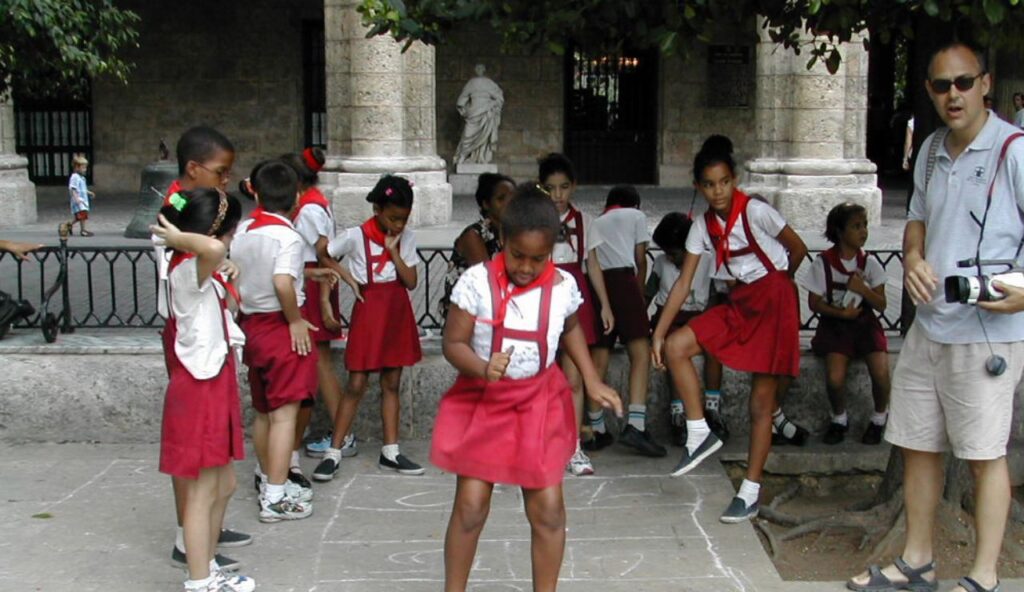
Hopscotch often gets linked to Roman soldiers, but historians note there is no evidence for that story. The first solid English references arrive in the late 1600s under names like scotch-hop and scotch-hopper.
A manuscript “Book of Games” compiled between 1635 and 1672 describes a tile or flat piece of lead tossed onto oblong squares, then retrieved by hopping. Soon after, “Poor Robin’s Almanack” mentioned scotch-hoppers as schoolyard play.
From there, the game kept the same tight bargain between balance and daring, while the court shape, the slang, and the marker changed with each neighborhood and era.
Snakes And Ladders

Snakes and Ladders looks like pure luck, yet its older Indian form, Moksha Patam, carried a moral map. Boards paired ladders with virtues and snakes with missteps, tying the climb and the slide to ideas about conduct.
Accounts connect it to traditional Hindu themes contrasting karma and desire, and it sat among a wider family of Indian dice games. From there it traveled to Britain in the 1890s.
A Victorian edition introduced in 1892 reshaped the symbols for a new audience, and the game kept spreading, sometimes renamed “Chutes and Ladders,” while the sudden rise and drop stayed exactly the point.
Jacks

Jacks looks like a handful of metal stars, but its older ancestor was literal bone. In the ancient Mediterranean, players used the astragalus, an ankle bone from sheep or goats, because it lands on a limited set of faces.
Greek and Roman accounts describe knucklebones as a dexterity game for children, and also as a diversion for adults, sometimes tied to prediction games. Different faces could be given point values, turning a simple toss into a readable result.
The same bones appear in excavations from very early periods, and later versions swapped in stones or metal, keeping the clack, the catch, and the pride of a clean run.
Marbles

Marbles feel like a factory toy, yet archaeologists have identified small stone balls as marbles at a Mohenjo-daro site linked to the Indus Valley Civilization, dated to about 2500 BCE. That pushes the game deep into prehistory.
Later sources note marbles across the ancient world, including mentions in Roman literature, and finds in Egypt and Mesopotamia.
Materials shifted from clay and stone to glass and polished minerals, and in 1503 Nuremberg even restricted marble play to a meadow outside town. Still, the scene stayed familiar: a circle on the ground, rules argued out loud, and a tiny sphere that matters a lot.
Blind Man’s Buff
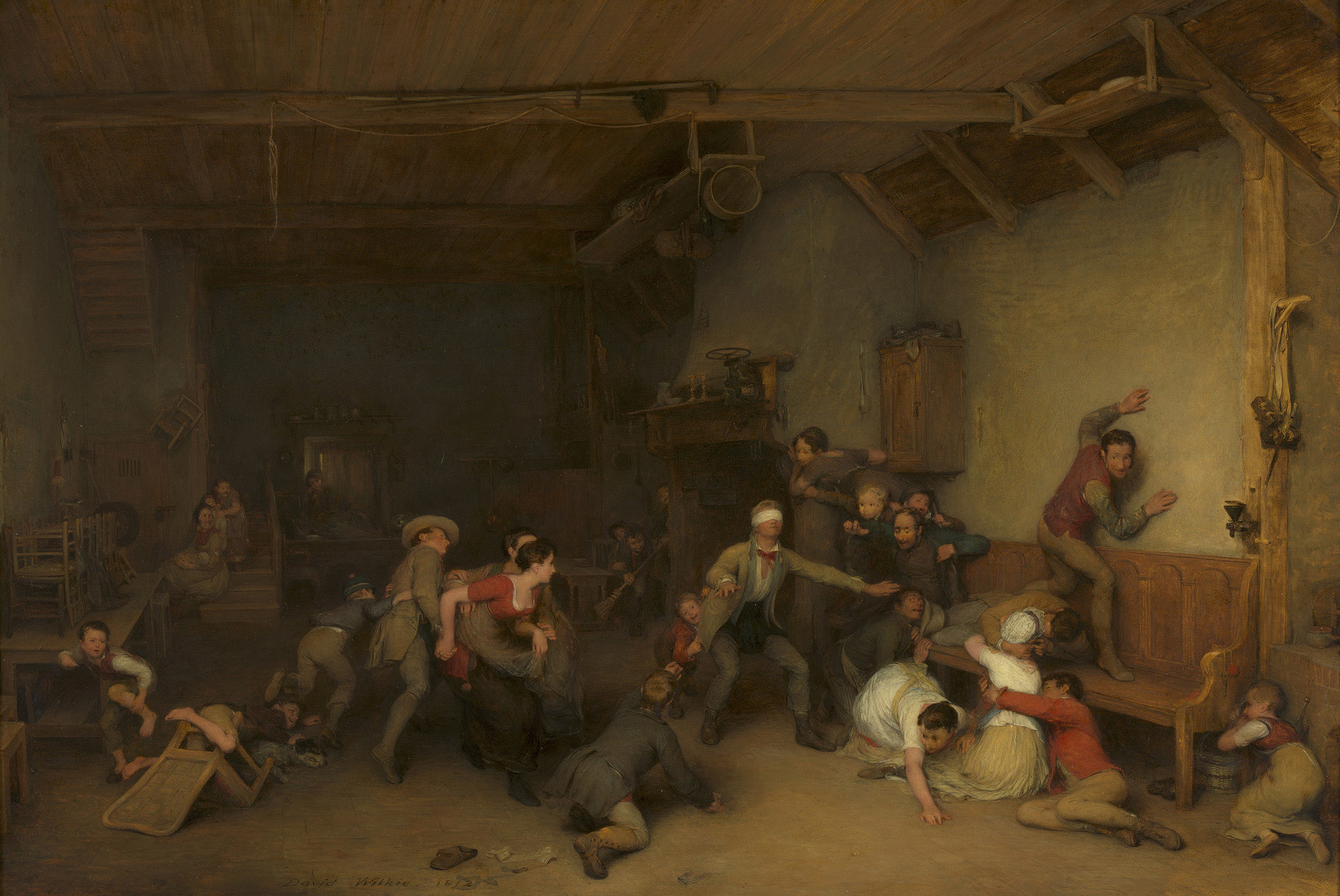
Blind man’s buff feels like pure chaos, yet Encyclopaedia Britannica traces it to Greece about 2,000 years ago. Across Europe it picked up local names that translate into the same joke, blind fly, blind cow, blind buck.
It later became a popular parlor game in England, long before it settled into modern party rules. The traditional word buff comes from an older sense of a light push, which fits the game’s gentle bumping and misdirection.
France calls it colin-maillard, tied to a medieval story about a fighter who lost his sight, but the lasting appeal is simpler: hearing gets sharper, footsteps get louder, and a room turns into a map built from sound.
Hide-And-Seek

Hide-and-seek feels too basic to have paperwork, yet it appears in ancient Greek under the name apodidraskinda. Encyclopaedia Britannica notes it as equivalent to a game described by the second-century writer Julius Pollux.
Pollux treated it as a known pastime, which hints at an even older life outside the page. The structure is familiar: one child shuts their eyes and counts while others vanish into corners.
A fresco from Herculaneum has been linked to the same idea, suggesting the pattern was recognizable long ago. Nothing about it requires a toy, only trust, patience, and the thrill of being unseen for a few held breaths.
Capture The Flag
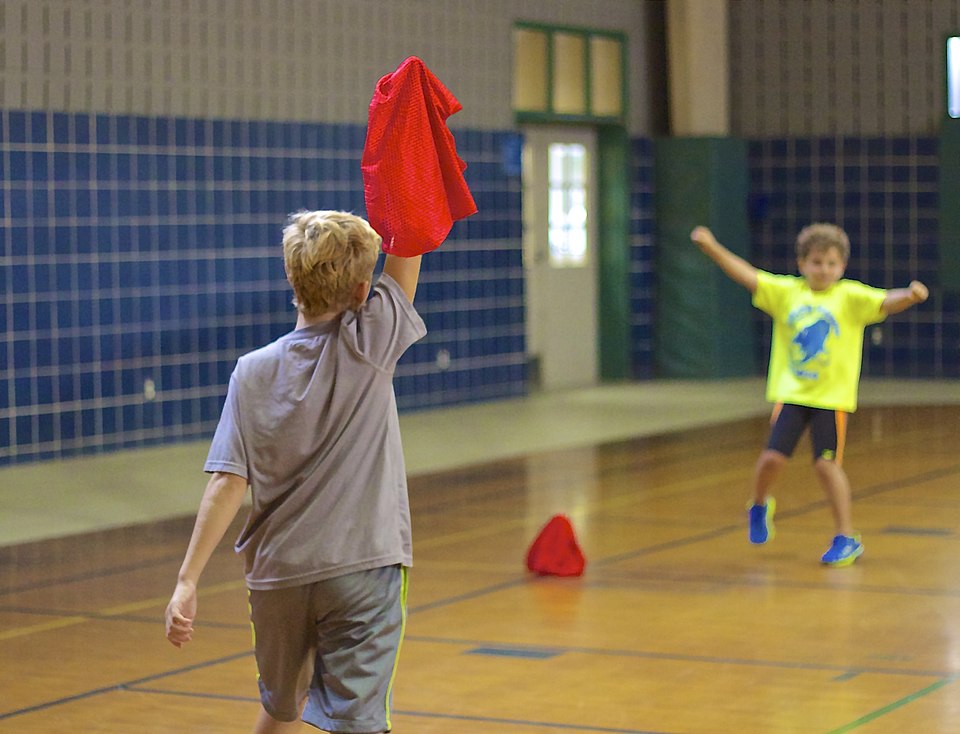
Capture the Flag reads like a summer-camp original, yet printed rules appear in 1860 in a German gymnastics manual by Wilhelm Lübeck. He called the game Fahnenbarlauf, and treated it as a variation on older European “Barlaufen.”
English descriptions came later, including “Scouting for Boys” in 1908 under the title “Flag Raiding,” where teams score by bringing a captured flag home.
That history explains the game’s logic: territories, bases, tags, and rescues, all wrapped in cooperation and quick choices. A strip of cloth is enough to turn an open field into a shared problem everyone wants to solve.
Jump Rope
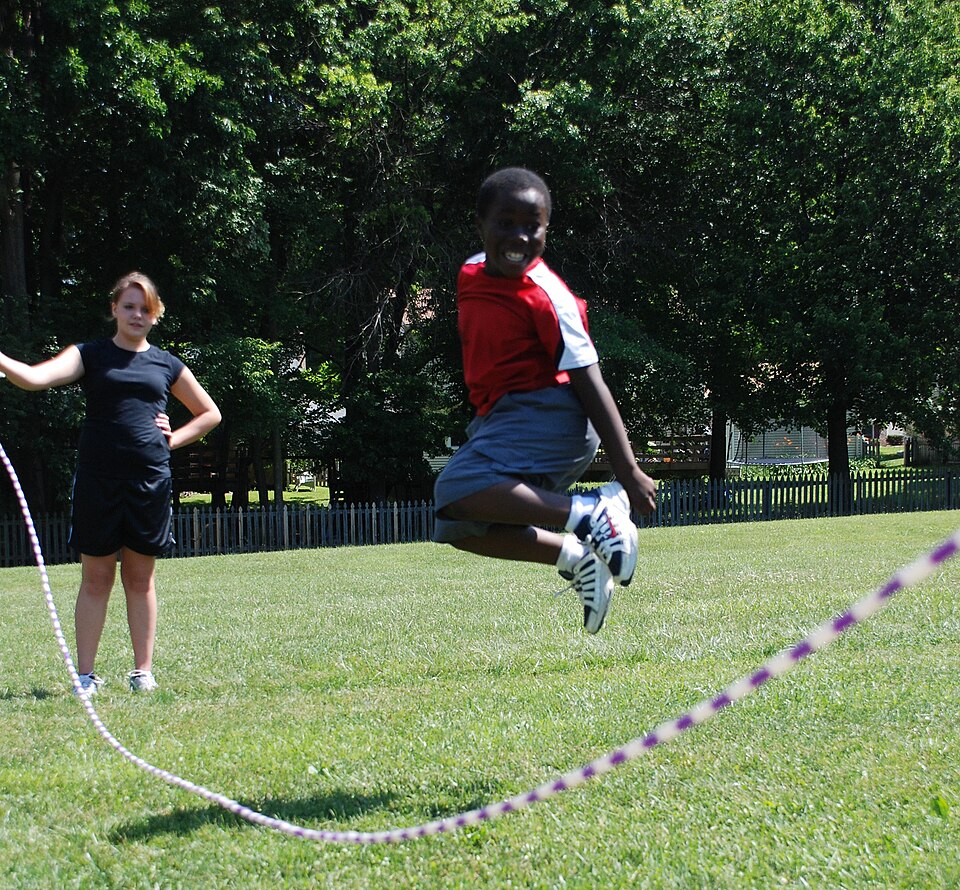
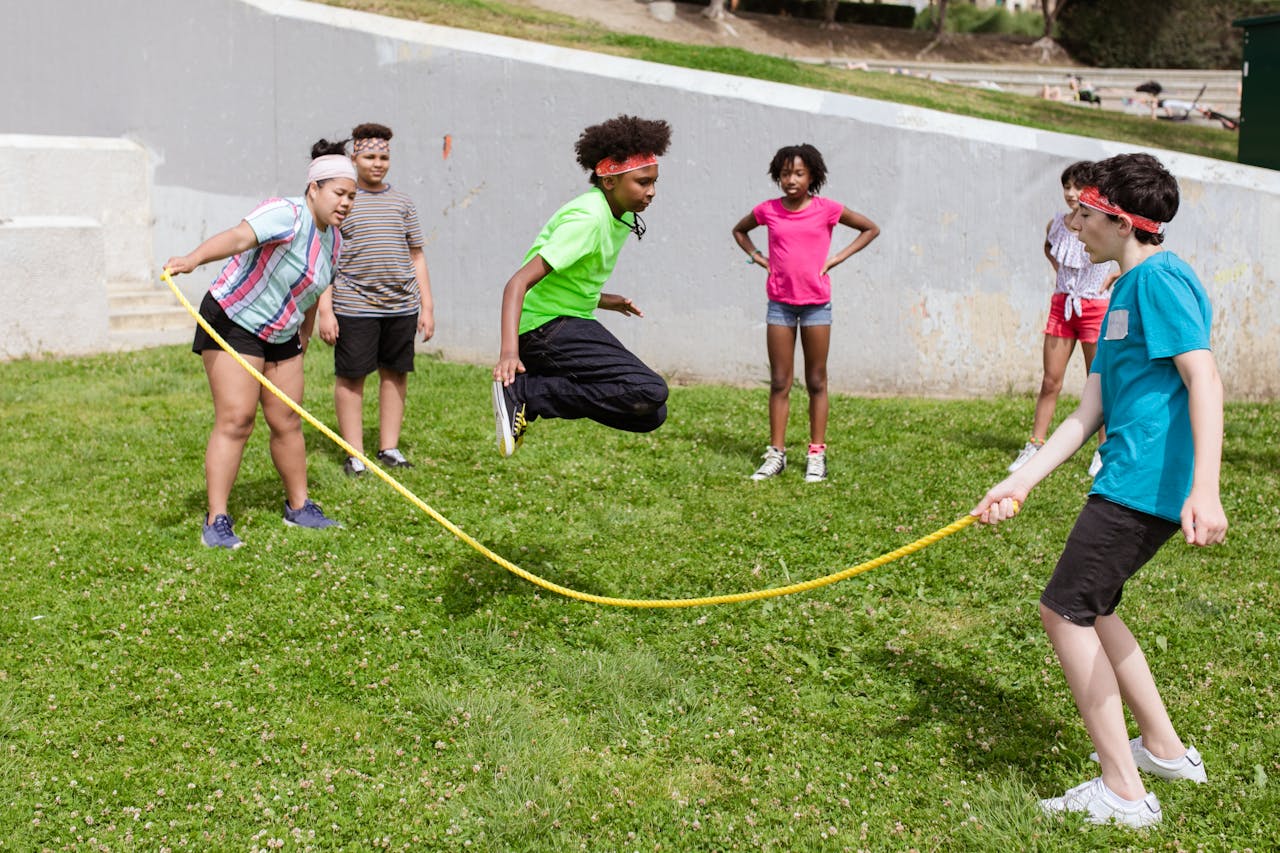
Jump rope is treated as a classic girls’ pastime, yet The Strong National Museum of Play notes it began in America as a boys’ activity among 17th-century Dutch settlers. The rope was cheap, portable, and perfect for building timing and stamina.
By the 1800s, girls had taken over the handles, even as advice books cautioned against too much exertion. By the early 1900s, it was widely linked to girls’ group play.
As leisure time expanded through the 19th century, skipping games multiplied, and chants became a kind of street poetry. The core stayed simple: a turning rhythm, a pair of wrists, and a body learning to trust the beat.
Rock, Paper, Scissors

Rock, paper, scissors is a tie-breaker, but the trail runs through China long before it reached schoolyards. A Ming-dynasty writer, Xie Zhaozhe, mentioned the hand game around 1600 and said it dated back to the Han era, calling it shoushiling.
Li Rihua also noted it in “Note of Liuyanzhai,” listing several names for the same gesture contest. From China it moved into Japan’s sansukumi-ken family of games, where earlier sets sometimes used animals.
The modern trio won out because it is quick, balanced, and easy to learn, then spread in the early 1900s. It still works for the same reason: it turns disagreement into a shared ritual.
Duck, Duck, Goose

“Duck, Duck, Goose” sounds purely American, yet Minnesota’s “Duck, Duck, Gray Duck” points back to Swedish-language versions. A CBS Minnesota report notes two Swedish forms, “Anka Anka Gås” and “Anka Anka Grå Anka,” which translate to duck, duck, goose and duck, duck, gray duck.
The same report also admits the migration story may be lore, even if it fits the region’s Swedish roots.
On the ground, the local call often stretches the chant with extra colors before the switch, sharpening the suspense. Either way, the name is a small reminder that playground rules travel with families, not publishers.