Some beaches only reveal their most memorable character after dark. When conditions line up, the water seems alive with light. Waves crackle with blue edges, wet sand carries a faint shimmer, and passing fish leave glowing trails beneath the surface. Locals treat the glow as a seasonal guest, watching moon phases, tides, and warm evenings as if reading a tide clock. Seen in silence, bioluminescent shores feel like the night sky has slipped onto the water and swapped stars for waves.
Mosquito Bay, Vieques, Puerto Rico
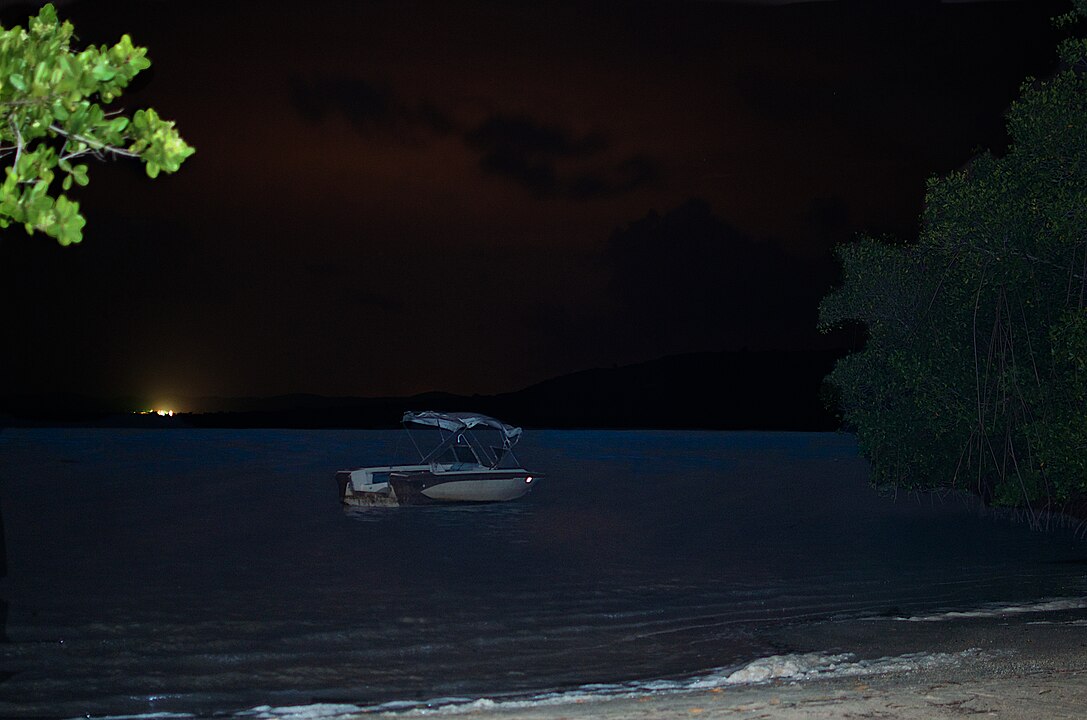
Mosquito Bay on the island of Vieques is known for water that lights up blue with every movement. Dense populations of dinoflagellates respond to the smallest disturbance, so paddles, fish, and even schools of manatees leave bright streaks that vanish as quickly as they appear. The bay is sheltered from rough wind and scattered light, which keeps conditions stable. Local guides time night tours around the new moon so the glow can take center stage without competing with anything else.
Luminous Lagoon, Falmouth, Jamaica

At night in Falmouth, the quiet surface of the lagoon can ignite into streaks of turquoise. Boats barely need to move before the water responds, glowing in response to passing fish or a hand trailing through the surface. The mix of warm shallows and protected mangrove channels creates ideal conditions for bioluminescent plankton, which is why this small inlet has earned such a reputation. It is one of those rare places where a slow ride at night becomes the main attraction.
Vaadhoo Island’s Sea Of Stars, Maldives
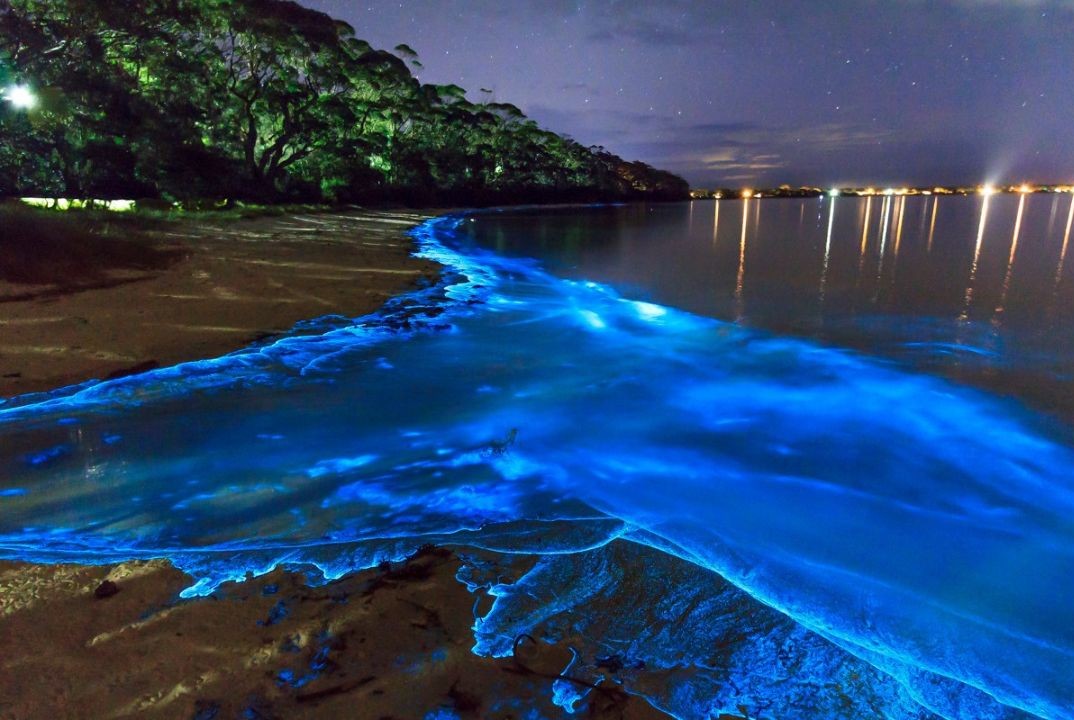
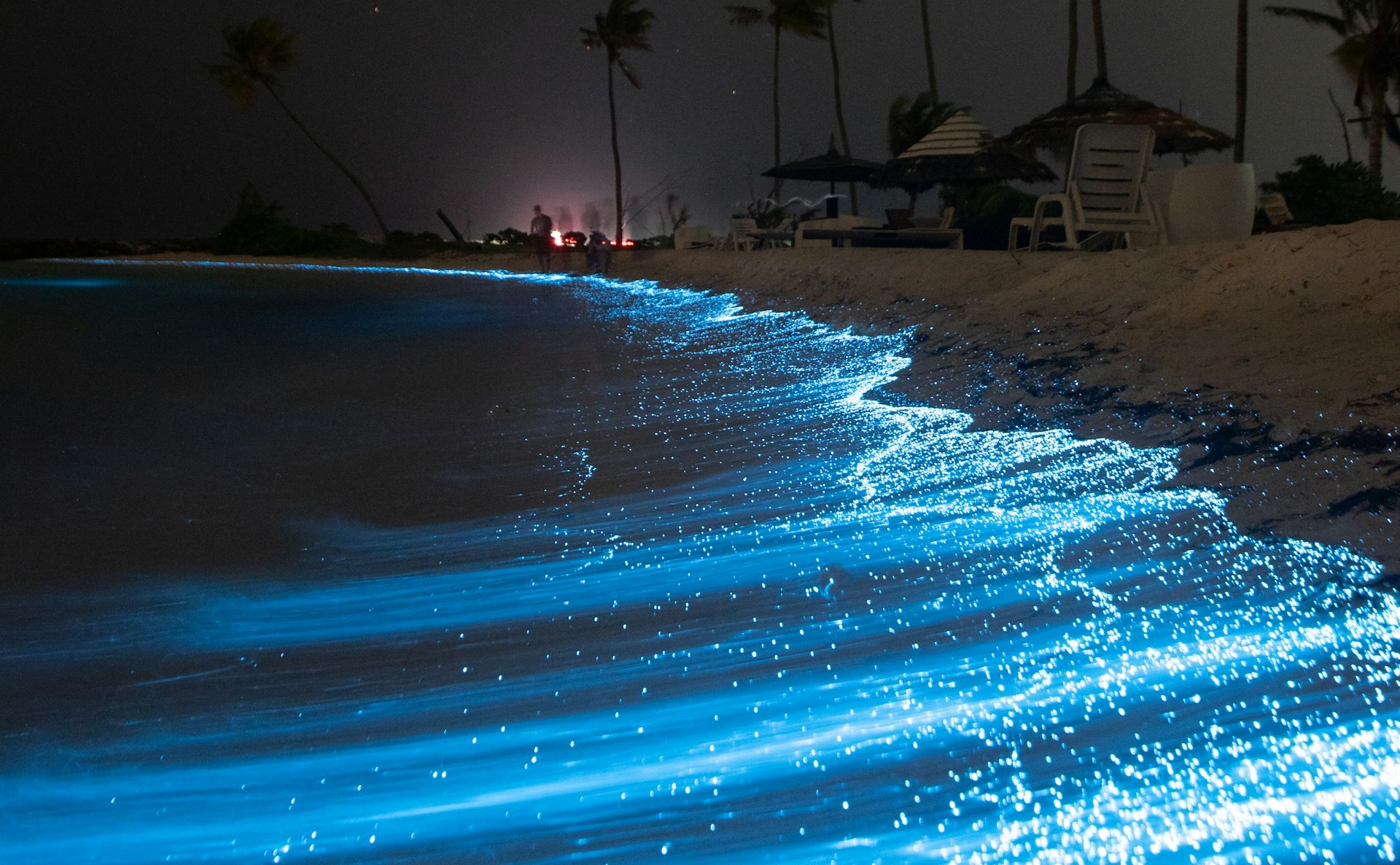
The glow around Vaadhoo Island is subtle at first, then sudden when the waves start to break. Bioluminescent plankton shine electric blue when stirred by surf or small fish, and when the night is dark enough, the entire shore looks dusted with stars. The glow tends to peak in warmer months and on moonless nights, so resorts along these beaches keep lights low. It creates a setting where the sea feels close and alive, even when the world is quiet.
Jervis Bay, New South Wales, Australia

Jervis Bay is a favorite destination for daytime swimming, but at night its personality changes. During warmer spells, bioluminescent plankton gather near the shoreline, and the edges of the surf start to flash blue. The glow appears and disappears quickly depending on the tide and wind, so locals keep an eye on still evenings and mild weather. When conditions align, beaches like Hyams turn into stages for brief streaks of light that roll with the incoming waves.
Bangaram Island, Lakshadweep, India
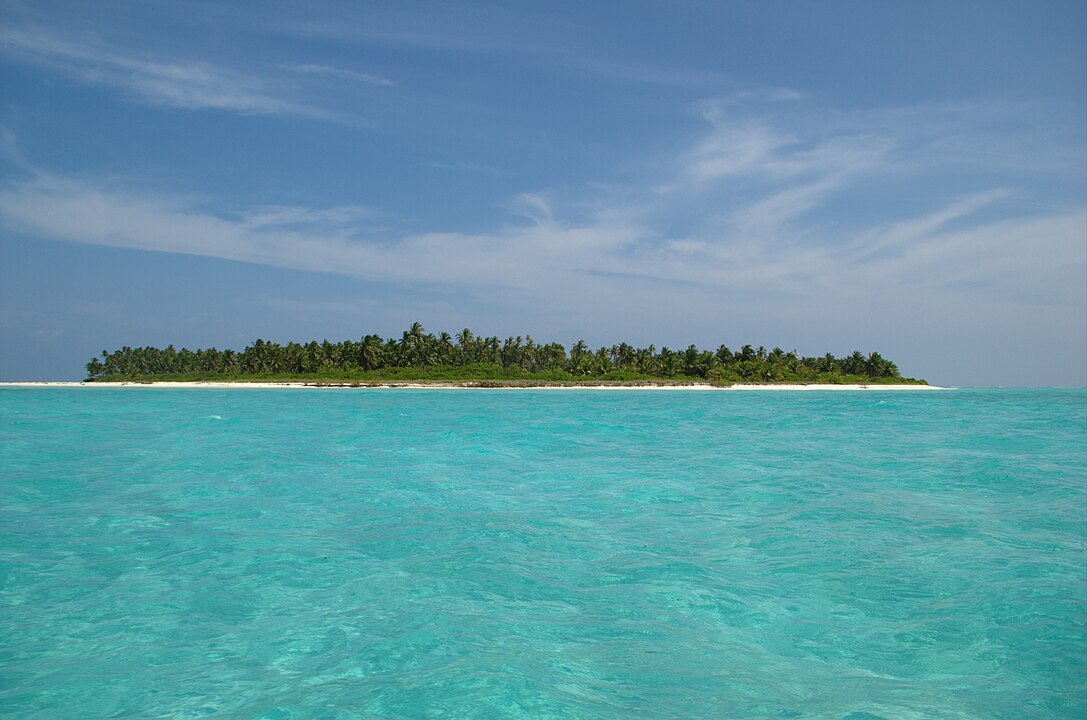
Bangaram Island has quiet coral reefs, clear water, and just enough isolation to keep the shoreline dark at night. Bioluminescent algae can gather during monsoon months, so each small wave at the shore leaves a glowing line across the sand. It is a place where the glow feels less like a tourist attraction and more like a natural rhythm that locals have learned to expect. The bright streaks remind visitors how much life is carried in the shallow water around the atoll.
Matsu Islands’ Blue Tears, Taiwan
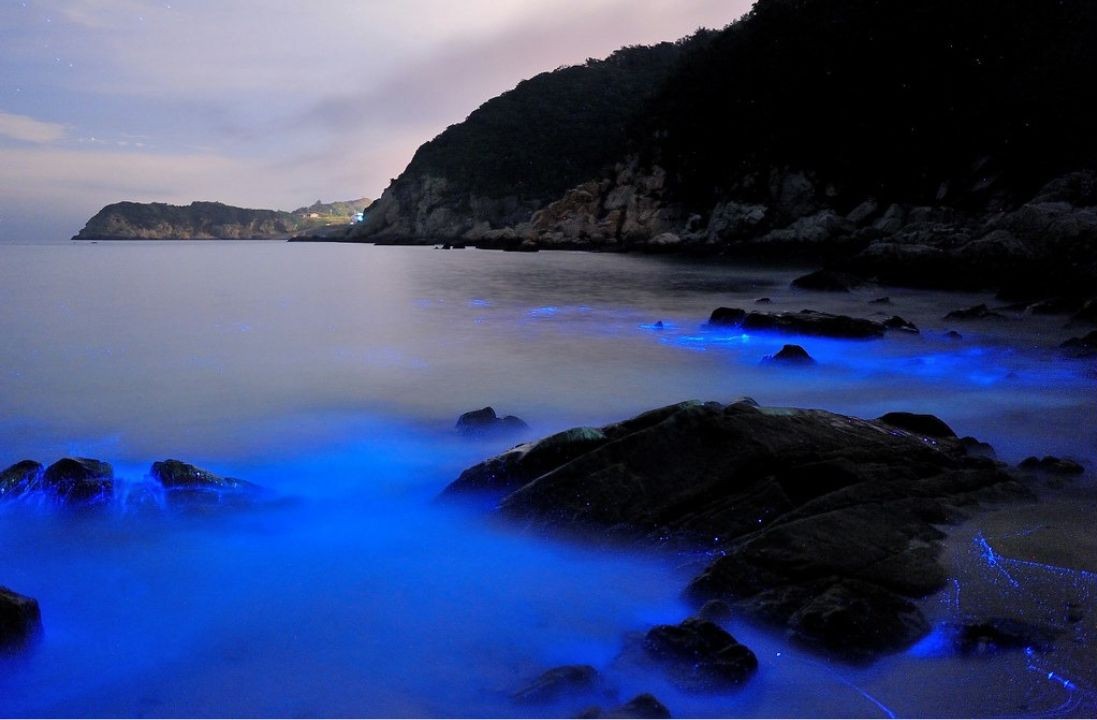
The Matsu Islands host a glow that locals call Blue Tears. Blooms drift into coves and harbors when the water warms in late spring and early summer, shining faint blue when stirred by current or oars. Fishing piers and rocky beaches become quiet viewing spots, where the glow seems strongest in protected corners. What began as a local secret has become a seasonal event, yet the best displays still depend on patience and the luck of calm weather.
Toyama Bay’s Firefly Squid, Japan
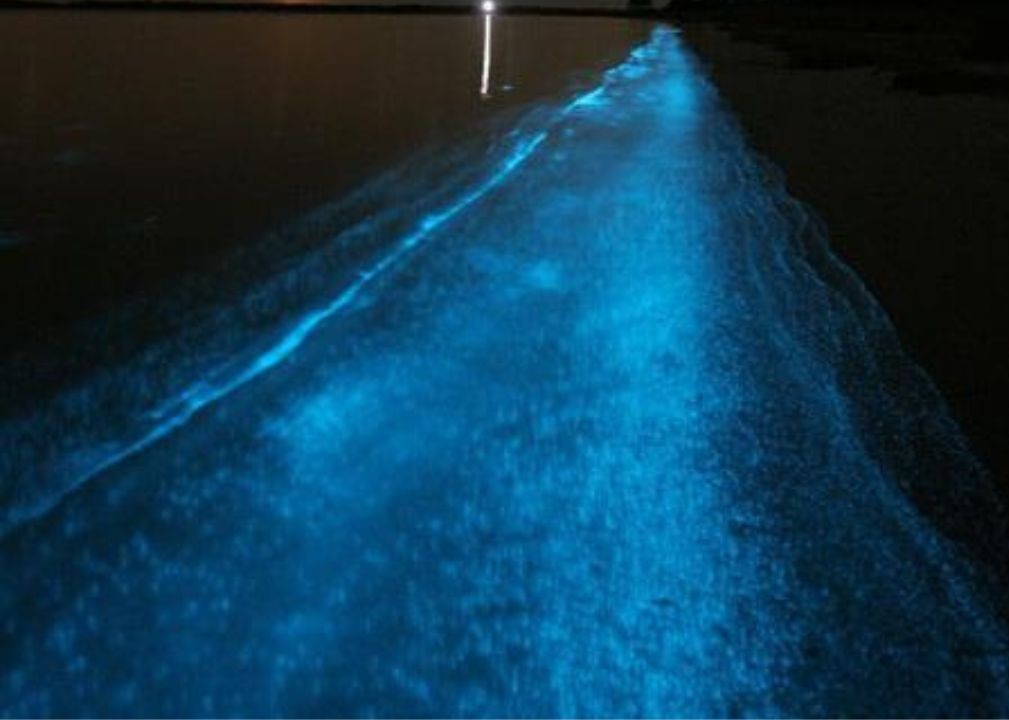
Toyama Bay glows with a different kind of light. Firefly squid rise from deep water in late March and April, flashing blue when disturbed by waves and fishing nets. Before dawn, long bands of light ripple across the surface, and boats sit quietly just offshore to watch. The glow lasts only a short season, but it connects fishing traditions, night tours, and coastal villages in a way that makes this small corner of Japan feel transformed.
Manasquan Beach, New Jersey, United States

Manasquan Beach glows more sporadically than tropical lagoons, but when it happens, the surf looks charged with energy. Warm water, calm nights, and the right plankton bloom can edge every breaking wave in soft blue. Residents share sightings when it appears, and night visitors gather without knowing exactly how long the glow will last. It proves that bioluminescence is not limited to remote islands. Even familiar beaches can briefly turn into something otherworldly.